
Six service lines, one licensed team, one sensible order
Electrical, Solar and Electrification Services in Melbourne’s West
Most people arrive here with one job in mind. A dead power point, a quote for solar, a gas ducted heater that has finally given up. What usually happens next is that the one job turns into three, because the house was wired for a different era and every new load lands back at the same switchboard.
- REC 37223
- Fixed written quotes
- 100% workmanship guarantee
The short answer
Pivot Trade Services is a licensed electrical, solar, battery and HVAC contractor based in Altona, working across Melbourne’s western suburbs. Six service lines cover general electrical work, solar, home batteries, heat pump hot water, heating and cooling, and EV charging. For most homes the cheapest order is switchboard first, then solar, then hot water and heating, then a battery, then EV charging. All electrical work is certified under REC 37223 with a Certificate of Electrical Safety.
This page sets out what we do across all six service lines, what each one realistically costs in 2026, and the order we suggest doing them in. We are a Registered Electrical Contractor (REC 37223) and SAA accredited solar and battery installer (S3962281), based at 11/23-25 Jordan Close, Altona, trading since 2005 and installing solar and batteries for the past seven years.
The six things we do
Every service line below is delivered by the same licensed team, which matters more than it sounds. A solar install, a heat pump changeover and an EV charger all end up as circuits on your switchboard, and a single contractor who has seen the board can plan for the next one instead of pricing around it.
Electrical
Switchboard upgrades, safety switches, fault finding, rewiring, power points, lighting, smoke alarms, surge protection and emergency callouts. Every job closes with a Certificate of Electrical Safety.
Solar
Grid-connected rooftop systems designed around self-consumption, with Fronius inverters. Sized against your actual usage rather than whatever fits on the roof.
Home batteries
Tesla, BYD and Alpha ESS storage, including backup circuits and VPP-ready configurations, with the federal Cheaper Home Batteries discount applied.
Heat pump hot water
Rheem heat pump changeovers from gas or electric storage, using roughly one third the electricity of conventional electric hot water, with rebates discounted off the invoice.
Heating and cooling
Split systems, multi-head systems, ducted refrigerated and evaporative cooling, plus service and repairs. Mitsubishi Electric is our default for reverse cycle.
EV charging
Wall-mounted chargers on a dedicated circuit, typically $1,200 to $2,200 single phase, with load management where the supply is tight.
Why the order matters more than the products
Electrification is not one purchase. It is four or five purchases spread over several years, and the order you make them in changes both the total cost and how much of each rebate you actually capture. Do it backwards and you pay twice for the same access, the same crane hire, the same board work.
The sequence below is what we recommend to most western suburbs homeowners. It is not a rule. A failed hot water service or a broken heater will reorder your priorities for you, and that is fine. But if you are planning rather than reacting, this order tends to cost the least over five years.
Where the money sits in 2026
Incentives change and most of them are shrinking. Federal STCs on solar taper each year and the scheme ends in 2030. The Solar Victoria Solar Homes rebate now carries a $150,000 combined household income cap from 1 July 2026. The federal Cheaper Home Batteries Program has been running since July 2025 and pays roughly $250 per usable kWh, tapering above 14kWh.
Victorian Energy Upgrades works differently to the rest. It is not a cash rebate you apply for. The discount is calculated and taken straight off your invoice, the property needs to be at least two years old, there is no income test, and there is a minimum customer contribution of $200 including GST. We do that paperwork, you just see the reduced number.
What changed when the feed-in tariff went
Victoria removed the mandatory minimum feed-in tariff on 1 July 2025. Export rates are now well under 5 cents per kWh while peak import sits at 30 to 45 cents. That single change is behind most of the advice on this site.
Exporting solar is now close to charity. Using it is worth six to nine times more. So the useful upgrades are the ones that move consumption into daylight or store it: heat pump hot water on a daytime timer, reverse cycle running while the sun is up, and a battery to carry the evening peak. Sizing a system for maximum export made sense in 2019. It does not in 2026.
Working in Melbourne’s west
We cover Altona, Altona North, Altona Meadows, Seaholme, Williamstown, Point Cook, Werribee, Hoppers Crossing, Laverton, Footscray, Yarraville, Newport, Spotswood, Sunshine, Sunshine North, Braybrook and Maidstone. Powercor and Jemena are the two distributors across that footprint, and which one you are on affects solar approval times and export limits.
The housing stock varies enormously across those suburbs, from post-war weatherboard in Altona and Yarraville to estate housing in Point Cook and Werribee. That changes the job. Older homes hit switchboard capacity first. Newer estates usually have the board capacity but long cable runs from meter box to garage. We quote on what is actually there, after looking at it.
Licensed and accredited
REC 37223 for electrical work, SAA S3962281 for solar and battery accreditation, ABN 87689296937.
Rated 5.0 from 69 Google reviews
All from real jobs across the western suburbs.
100% workmanship guarantee
Separate from and in addition to manufacturer product warranties.
How we quote
We look at the switchboard and the meter box before we price anything electrical, solar or battery related. Quoting a battery or an EV charger without seeing the board is how surprise costs happen, and we would rather have the awkward conversation upfront than halfway through an install day.
Quotes are itemised so you can see equipment, labour and any rebate applied separately. If a job needs distributor approval, a permit or a switchboard upgrade to proceed, that appears on the quote rather than as a variation later. Call 0401 500 446 or 1300 748 688, or email info@pivottradeservices.com.au.
| Work | Before incentives | After incentives |
|---|---|---|
| 6.6kW solar system | $4,500 - $8,500 | $3,000 - $6,000 |
| 10kWh home battery | $8,000 - $12,000 | $5,500 - $9,500 |
| Heat pump hot water changeover | Varies by model | Commonly $3,000+ in stacked incentives |
| Switchboard upgrade | $800 - $3,500+ | Not rebated |
| EV charger, single phase | $1,200 - $2,200 | Not rebated |
Indicative ranges only. Final pricing depends on roof access, board condition, cable runs and equipment selected. Every quote is site specific.
Before you book anything, check these
- 1Photograph the inside of your switchboard, including the main switch and any fuses, and have it ready when you call.
- 2Find a recent electricity bill showing daily usage in kWh and your current feed-in rate.
- 3Note whether your supply is single phase or three phase, usually visible at the meter.
- 4Check whether the property is at least two years old, which is a condition of Victorian Energy Upgrades discounts.
- 5Work out who your distributor is, Powercor or Jemena, since export limits and approvals go through them.
- 6Decide what you want the system to do in a blackout, because that changes battery selection significantly.
How the job runs
- 01
1. Switchboard and wiring first
Every later upgrade lands here. Fixing capacity, RCDs and any ceramic fuses before you add loads means the solar, battery, heat pump and charger installs all run clean instead of stalling on the day.
- 02
2. Solar next
Solar is still the highest return per dollar and the incentive is shrinking each year until the scheme ends in 2030. It also creates the cheap daytime energy that makes every following step worth doing.
- 03
3. Hot water and heating
Move your two biggest energy loads onto electricity you are already generating. Heat pump hot water on a daytime timer and reverse cycle heating both convert surplus solar into savings without any storage hardware.
- 04
4. Battery after that
A battery only pays once you have solar to fill it and know your evening load. Doing it fourth means you size it against a full year of real data rather than a guess.
- 05
5. EV charging last
Add the charger when the car arrives, on a board that already has capacity and a supply that already has solar behind it. Charging from a 4 cent export instead of a 40 cent import is the whole point.
Recent work
Services we have done around Melbourne's west
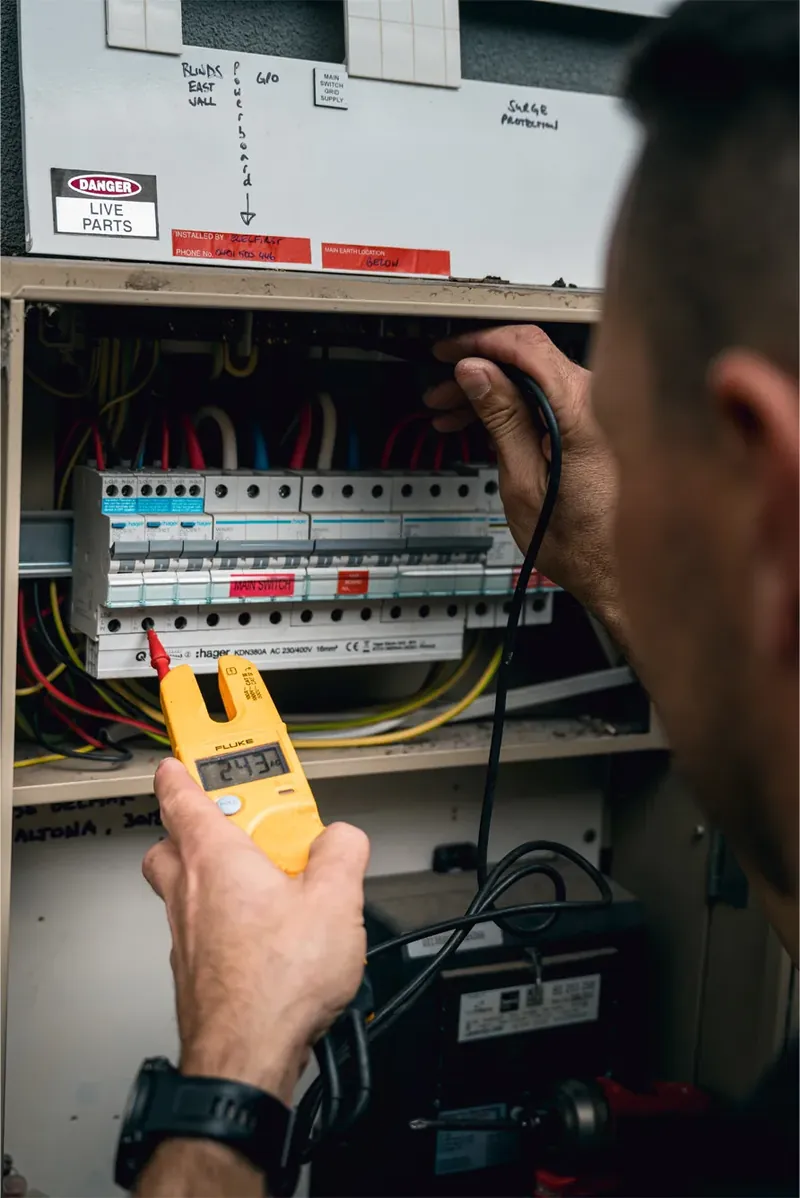
Live testing after a switchboard upgrade in Melbourne's west 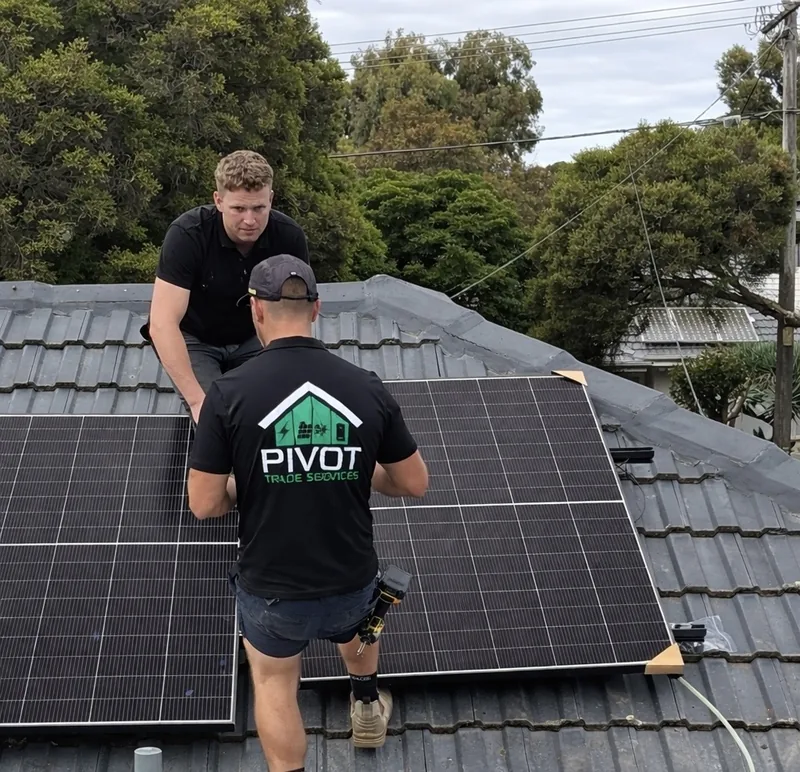
Panels going on over a tiled roof in Melbourne's west 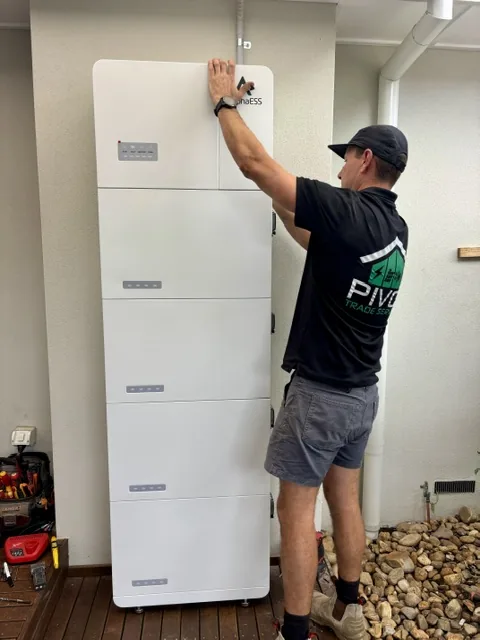
Stacking the modules on a home battery install 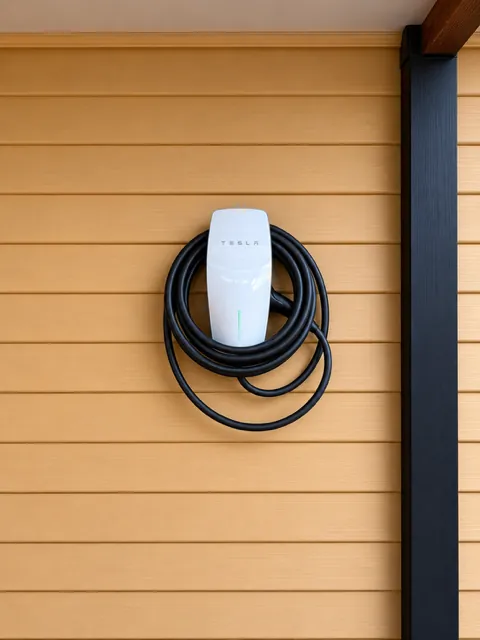
A Tesla Wall Connector on a dedicated 32A circuit 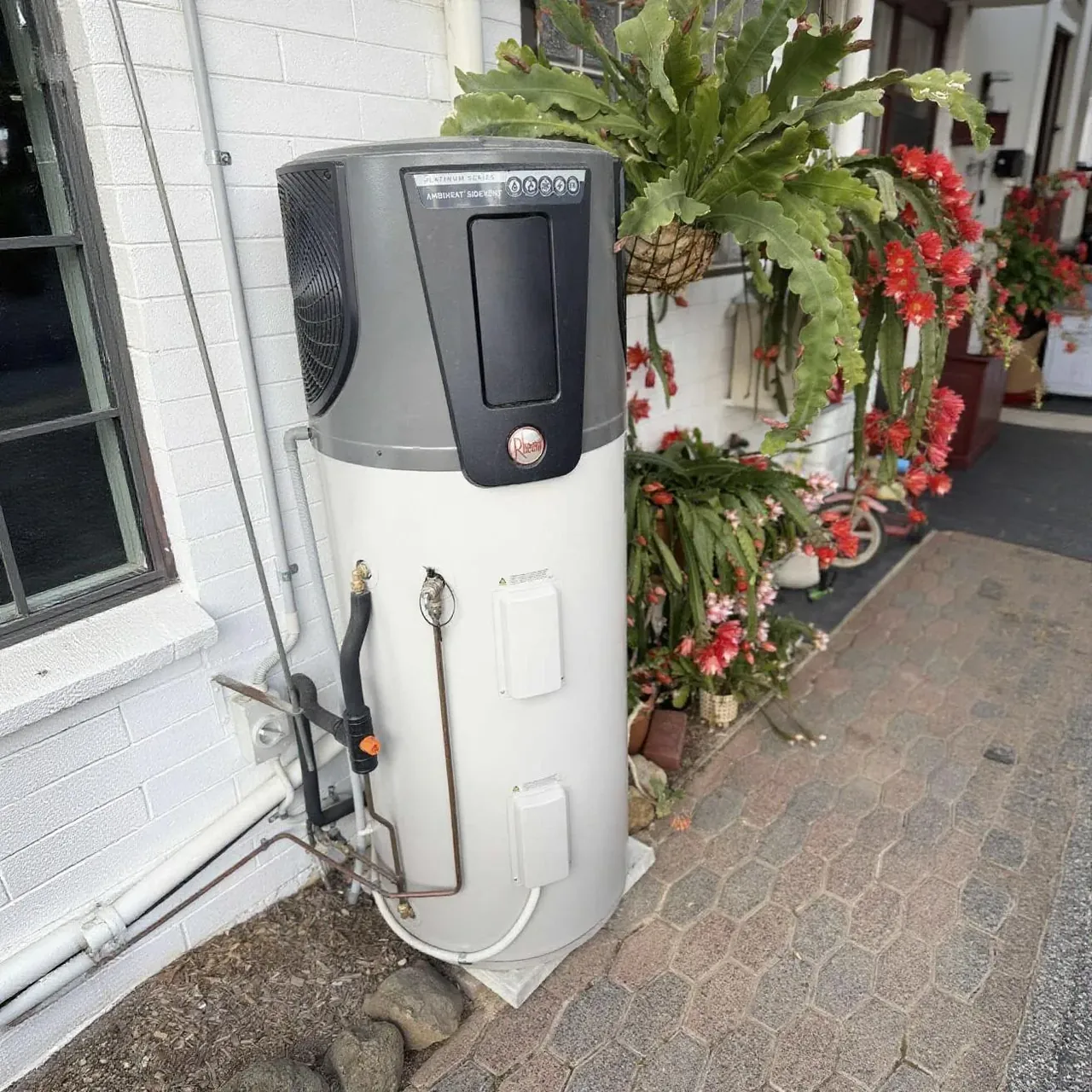
Heat pump hot water, swapped in where the old gas unit sat 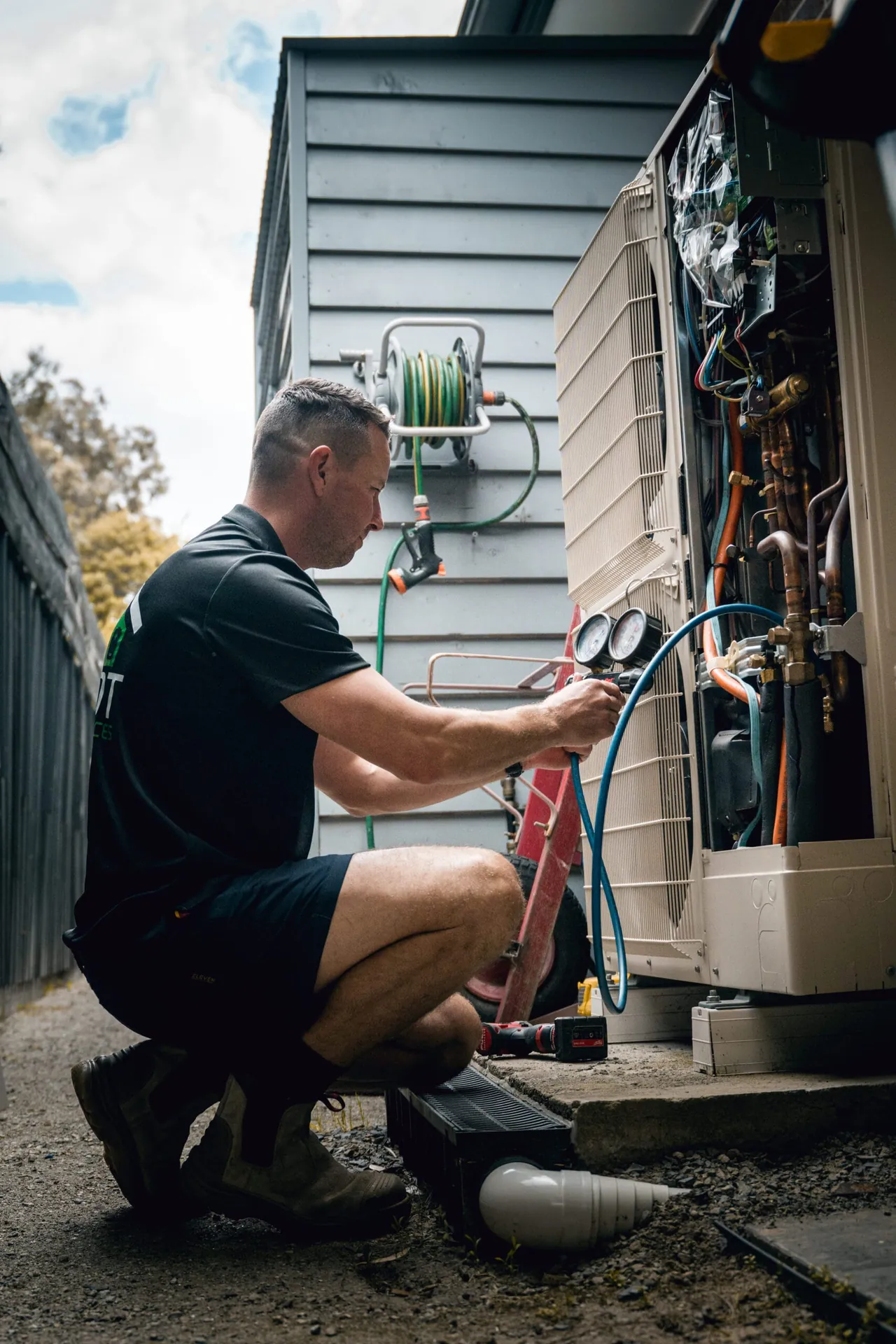
Gauges on during a service, checking the charge
Photographs from our own jobs. No two switchboards, roofs or run lengths are the same, which is why we quote in writing after seeing yours.
Licensed and accredited work by a local team. Read about Pivot Trade Services or see recent jobs across the western suburbs.
Answers
Frequently asked questions
No, and most people should not. Spreading the work over three to five years lets each stage be paid for partly by the savings from the last. The one thing worth doing early is the switchboard assessment, because it is cheap to look at and expensive to discover mid-install. Everything else can wait for the right budget or the right failure.
These trades converged. Solar, batteries, heat pumps, reverse cycle and EV chargers are all electrical installations that terminate at your switchboard, and all of them require a Certificate of Electrical Safety from a licensed REC in Victoria. Keeping them under one licence means the board is planned once for all of it rather than patched five separate times.
Federal STCs and the Solar Victoria Solar Homes rebate can both apply to a solar system if you meet the income cap. The federal Cheaper Home Batteries discount applies to battery storage. Victorian Energy Upgrades applies to eligible efficiency upgrades such as heat pump hot water and reverse cycle. We check eligibility for each one before quoting, since conditions differ.
Melbourne’s western and inner-western suburbs, from Footscray and Yarraville through to Werribee and Point Cook, with our base in Altona. Suburbs closest to Altona get the fastest response for urgent electrical work. If you are outside that footprint, call and ask rather than assuming, because scheduled installs travel further than service calls.
Quotes for installation work such as solar, batteries, hot water, air conditioning and switchboard upgrades are free and site specific. Diagnostic work is different. If you are asking us to find an intermittent fault, that is billable labour, because the finding is the job. We tell you which category you are in before we attend.
It covers our installation work, so mounting, cabling, terminations, isolators, penetrations and commissioning. It sits alongside the manufacturer warranty on the equipment itself, which is usually much longer for panels, inverters and batteries. If something fails, we sort out which warranty applies rather than sending you to the manufacturer.
All electrical work in Victoria must be carried out by a licensed electrician and certified with a Certificate of Electrical Safety. Solar arrays must comply with AS/NZS 5033, grid-connected inverters with AS/NZS 4777.2, and all wiring with AS/NZS 3000. Rebated solar and battery work must be installed by an accredited installer, which is what the SAA number covers.
Get a fixed quote on services
Tell us what you need and we will give you a written price, not a range that moves on the day.
- Free
- On-site quotes
- Fixed
- Written pricing
- 100%
- Workmanship guarantee
- 5.0★
- 69 Google reviews