
Room by room heating without a gas connection
Split System Heating That Costs Less to Run
Plenty of people buy a split system for summer and discover it is the cheapest heater in the house. That is not marketing. A reverse cycle head unit in a lounge room will heat that space for a fraction of what a gas wall furnace or a set of column heaters costs, and it does it without a flue, a gas bill or an open flame.
- REC 37223
- Melbourne west
- Fixed quotes
The short answer
A reverse cycle split system heats a single room or open plan area for roughly 28 to 36 cents an hour, against 50 to 72 cents an hour for ducted gas, a saving of about $200 to $450 a year. It returns 3 to 4 units of heat per unit of electricity because it moves heat rather than burning fuel. Installed cost runs $2,500 to $7,500 depending on capacity and the number of indoor heads.
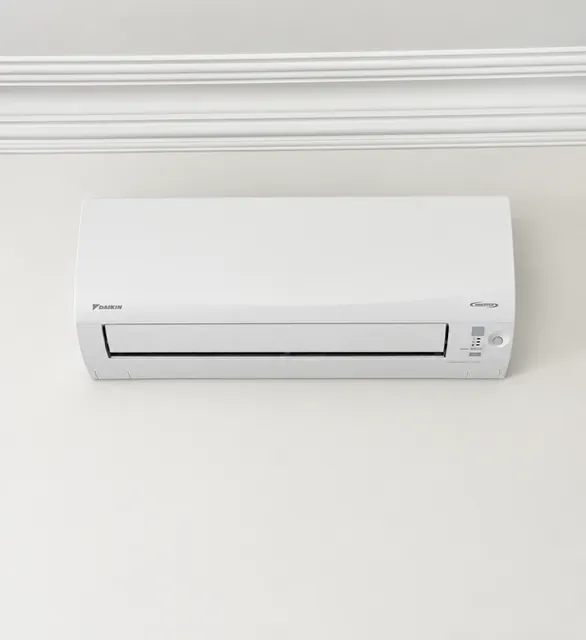
From one of our jobs
Head placement decides how evenly a room heats
Photographed on site in Melbourne’s west. REC 37223.
This page is about the heating side specifically, because heating is where sizing, head placement and low temperature performance actually get tested. A unit that cools your lounge perfectly in February can still disappoint you in July if it was chosen on cooling capacity alone.
Heating capacity and cooling capacity are different numbers
Every split system carries two ratings on the label, one for cooling and one for heating, and they are not the same. On most units the heating capacity is slightly higher than the cooling capacity, but the rated output also falls as the outside air gets colder because there is less heat available to collect.
That is why we quote against the heating load in a Melbourne winter rather than the cooling load in a Melbourne summer. For a well insulated 4 by 5 metre bedroom, 2.5 kW is usually right. A 6 by 7 metre open plan living and dining space with a raked ceiling and west facing glass is more likely 6 to 7.1 kW. Ceiling height, insulation, glazing and orientation all move that number, which is why we work from volume and construction, not floor area.
2.5 kW
Bedroom, study or small sitting room with standard ceilings and reasonable insulation.
3.5 kW
Large bedroom, small lounge, or a bedroom with significant west facing glass.
5.0 kW
Typical living room, or a lounge and kitchen that share air without a door between them.
7.1 to 8.0 kW
Open plan living, dining and kitchen, high ceilings, or a room that opens to a stairwell.
Where the head goes changes how well it heats
Warm air rises, which works against a high wall head unit. A good installation aims the airflow down and along the floor, so the room fills from the bottom rather than baking the ceiling. We look for a wall that lets the unit throw across the length of the room, not into a bulkhead or straight at a curtain.
The other constraint is the pipe run back to the outdoor unit. Short, direct runs perform better and cost less to install. Long runs through a roof space need extra refrigerant, more insulation on the pipework, and careful thought about oil return on vertical rises. We will always tell you when a preferred head position adds real money, and what the alternative costs.
Single head, or multi head?
A multi head system runs two to five indoor units off one outdoor unit. It looks tidier and saves wall space outside, which matters on the narrow side setbacks common in Newport and Seddon. The trade off is that all the indoor heads share one compressor, so they cannot run in heating and cooling at the same time, and if the outdoor unit fails every room loses its heating at once.
Separate single head systems cost more in outdoor units and pipework but fail independently, run at their best efficiency in each room, and are simpler and cheaper to repair. Our general advice is to use singles where there is room for the outdoor units, and multis where there genuinely is not.
What defrost is, and why your unit blows cold for a moment
On damp mornings below about 7 degrees, frost forms on the outdoor coil. The system periodically reverses to melt it, which is why the outdoor unit steams and the indoor fan stops for a few minutes. This is designed behaviour, not a fault, and the indoor fan pausing is the unit avoiding blowing cold air at you.
Frequent, long defrost cycles are a different story. They usually point at an outdoor unit sited where it cannot breathe, a fan or sensor problem, or low refrigerant charge. If your system spends more time defrosting than heating, it is worth a service call rather than a bigger thermostat setting.
Installation, licensing and what you should receive
Two licences apply to every split system install in Victoria. Refrigerant handling requires an ARC licence, and the electrical connection must be done by a licensed electrician who issues a Certificate of Electrical Safety. Pivot holds REC 37223 and does both parts in house, so there is no waiting on a second trade to energise the unit.
A correct install includes pressure testing and vacuum before the refrigerant is released, a properly graded and terminated condensate drain, sealed wall penetrations, and a commissioning check that measures the temperature split across the indoor coil. Ask for those. A unit that has been gassed up without a vacuum will work for a season and then start giving you trouble.
Signs your existing split is underperforming as a heater
- 1Takes more than 30 minutes to lift a closed room by a few degrees
- 2Outdoor unit runs constantly at full speed on mild evenings
- 3Air from the head feels warm at the grille but the floor stays cold
- 4Defrost cycles every 20 to 30 minutes on a dry day
- 5Circuit breaker trips when heating starts, but not when cooling
- 6Rattling or a rising pitch from the outdoor fan under load
On the job
Split System Heating in Melbourne's west
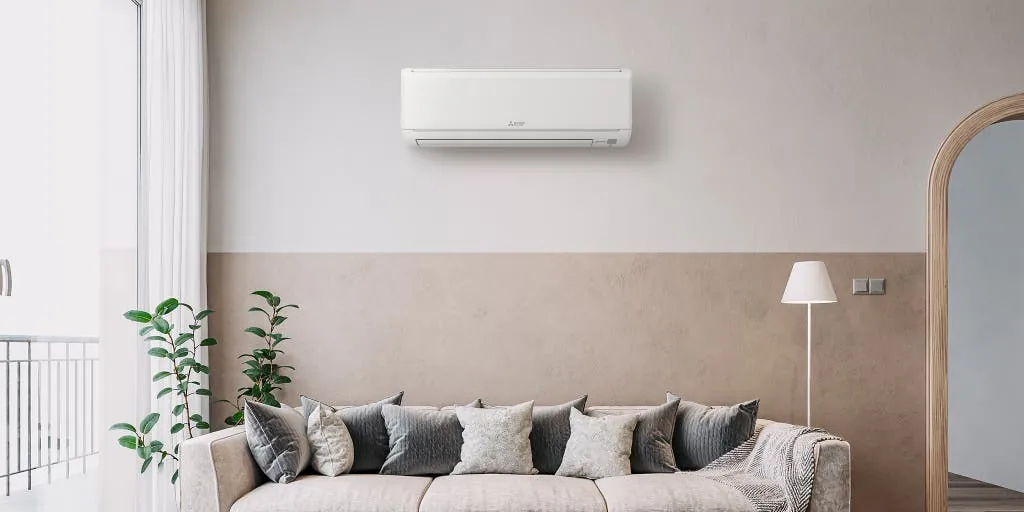
Head placement decides how evenly a room heats 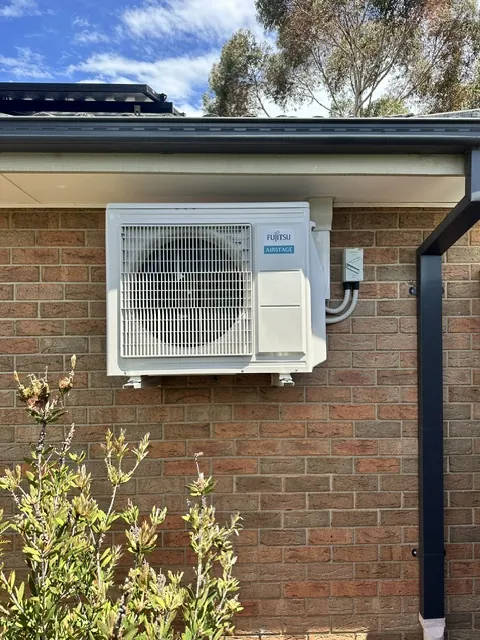
Outdoor units set on level mounts, clear of the fence line
Licensed and accredited work by a local team. Read about Pivot Trade Services or see recent jobs across the western suburbs.
Answers
Frequently asked questions
In almost every case, yes. A gas wall furnace converts roughly 80 to 92 percent of its fuel to heat, while a reverse cycle split returns 3 to 4 units of heat per unit of electricity. Heating one room typically costs 28 to 36 cents an hour on reverse cycle. Dropping the gas connection entirely also removes the daily supply charge.
For most Melbourne homes, set it and leave it during the hours you are home rather than cycling it hard. Inverter compressors are most efficient when they idle at low speed maintaining a temperature. Running it 24 hours in an empty house is waste, but switching it off and blasting 30 degrees for two hours is worse than a steady 20 to 21.
Only if the house is small and open. Air will not turn corners or travel through closed doors, so a single 7 kW head in the lounge will not warm bedrooms at the far end of a hallway. We would rather quote a second small head in the bedroom wing than sell you an oversized unit that heats the living room to 26 degrees while the rest of the house sits at 14.
Between 18 and 21 degrees is the range where comfort and running cost meet. Every degree above that adds noticeably to consumption because the system has to work harder against a bigger difference to the outside air. Setting 28 does not heat the room any faster, it just overshoots.
Usually yes for anything above about 3.5 kW. Splits should be on a dedicated circuit with their own isolator, and older switchboards in the west often have no spare capacity. We check the board at quote and include any upgrade in writing rather than discovering it on install day.
Ten to fifteen years is realistic for a quality unit that gets its filters cleaned and an occasional service. Coastal installs in Altona, Williamstown and Point Cook see faster corrosion on outdoor coils, so a rinse of the outdoor coil each spring genuinely adds years.
Yes. Upper floor heads usually mean an outdoor unit on brackets or a longer pipe run down a cavity or in a duct. Rendered and brick veneer walls both take core drilled penetrations that we seal and finish properly. We will show you the proposed pipe path before we drill anything.
Book split system heating
Tell us what you need and we will give you a written price, not a range that moves on the day.
- Free
- On-site quotes
- Fixed
- Written pricing
- 100%
- Workmanship guarantee
- 5.0★
- 69 Google reviews