
Cheap to run on dry days, honest about the rest
Evaporative Cooling, and When It Is the Right Choice
Evaporative cooling is genuinely cheap to run and moves a huge volume of fresh air through a house. On a dry 36 degree day with a northerly blowing, a well maintained system is comfortable and costs very little. That is a real advantage and we still install and service plenty of them across Werribee, Melton and Caroline Springs.
- REC 37223
- Melbourne west
- Fixed quotes
The short answer
Evaporative cooling draws outside air through wet filter pads and pushes it through the house, so it only works with windows or doors open and it adds moisture to the air. It performs well on dry Melbourne northerlies and runs for a few cents an hour because the only electrical loads are a fan and a small pump. On humid days it cools very little, which is why households that sleep badly in February usually move to refrigerated cooling.
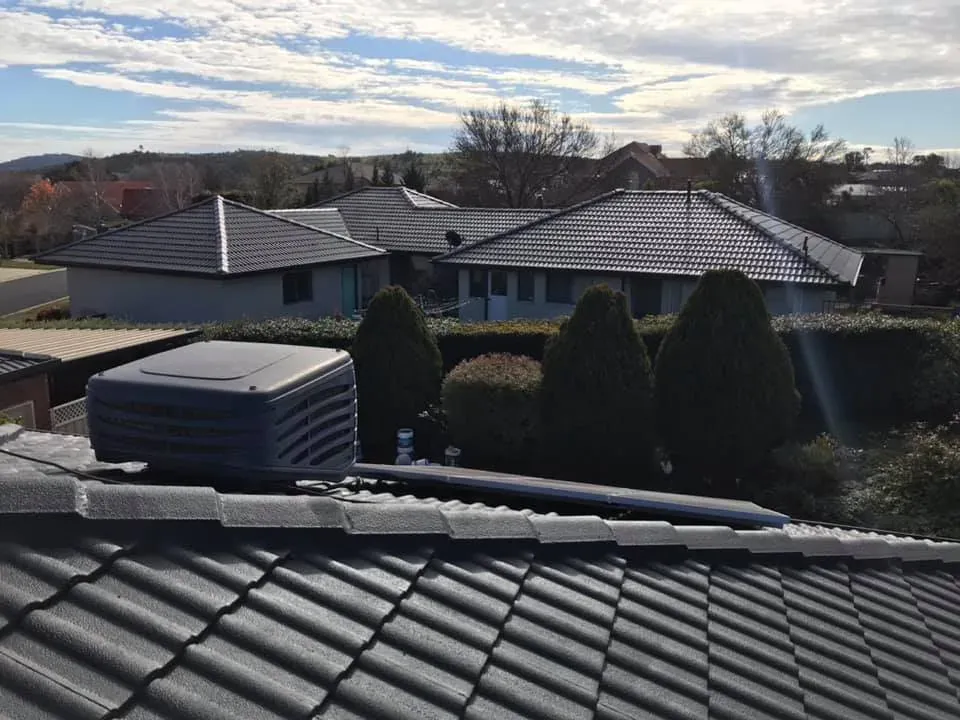
It also has limits that no installer should talk around. It relies on evaporation, so its performance falls away as humidity rises, and it needs open windows to work at all. If nobody explains that before you buy, you find out on the first sticky night in February. This page gives you both halves.
How it works, in one paragraph
A roof mounted unit draws outside air through pads that are kept wet by a small pump. As water evaporates off the pads it takes heat out of the air, and a large fan pushes that cooled, humidified air down through ducts into the house. The air then has to leave, which is why you open windows or doors in the rooms you want cooled. That flow of air out of the house is part of the design, not a leak.
Because the only electrical loads are a fan and a pump, running costs are low. Because the cooling comes from evaporation, the drier the outside air the better it performs, and the more humid the air the less it can do.
The honest limitations
We would rather set the expectation now than argue about it in January. Evaporative cooling cannot dehumidify, and on a muggy 30 degree evening with high humidity it will make a room feel damp rather than cool. It also cannot be used with the house closed up, so it does not suit anyone who wants to lock the house and leave it cooling, and it brings outside air in, which means pollen, dust and bushfire smoke come with it.
There is a water cost as well, and the unit sits on the roof where it needs annual attention. None of that makes it the wrong choice, but it does mean the choice is about your household. Families who are home during hot days and like fresh air get on well with evaporative. People who sleep with the house shut and struggle in humidity usually do not.
Needs windows open
Air has to exit the house. Open the rooms you want cooled and close the rest to direct the airflow where you want it.
Struggles in humidity
The muggy days at the end of a heatwave are exactly when it performs worst, and that is often when you want it most.
Brings outside air in
A drawback on smoke days and during grass pollen season for anyone with asthma or hay fever.
Roof mounted
Pads, pump and bearings live on the roof and need annual service. Old units can leak into the ceiling if the drain or float fails.
Uses water
A summer of heavy use is a visible line on the water bill, and the unit should be dumping and refilling to control mineral build up.
Service, or replace?
Evaporative units last around ten to fifteen years, and the failures follow a pattern. Pads that have gone hard and mineralised, a pump that has seized, a water distribution system that has clogged so half the pad stays dry, corroded trays, and bearings that whine. Pads and pumps are routine consumables and worth replacing. A corroded tray on a fifteen year old unit is the end of it.
When a unit is at the end of its life, that is the natural point to ask whether evaporative is still what the household wants. We will quote a like for like replacement and a refrigerated alternative side by side, with running costs for both, rather than assuming you want the same thing again.
Getting the most out of the system you have
Start the system early, before the house has heated up, and run it on a low fan speed with the water on rather than blasting it at 4 pm. Open windows in the rooms you are using and close doors to the rooms you are not, because that is how you aim the airflow. On a very humid day, run it on fan only or leave it off, since adding moisture to already humid air makes the room feel worse.
A service before each summer is worth doing. Pads that are half blocked cut both airflow and cooling, and a pump that is struggling will tell you long before it dies if someone is up there listening.
| Job | Detail | Price guide |
|---|---|---|
| Annual service | Pad clean or replace, pump check, bearings, drain and float test | $220 - $380 |
| Pad replacement set | Parts and labour, typical domestic unit | $350 - $700 |
| Pump replacement | Supply and fit water pump | $280 - $480 |
| Replacement unit, existing ducts | Like for like changeover on serviceable ductwork | $3,200 - $5,500 |
| New system with ductwork | Full install including roof penetration and outlets | $4,500 - $7,500 |
Roof access, unit size and duct condition move these figures. Evaporative systems are not eligible for the same Victorian Energy Upgrades discounts that apply to reverse cycle equipment.
On the job
Evaporative Cooling in Melbourne's west
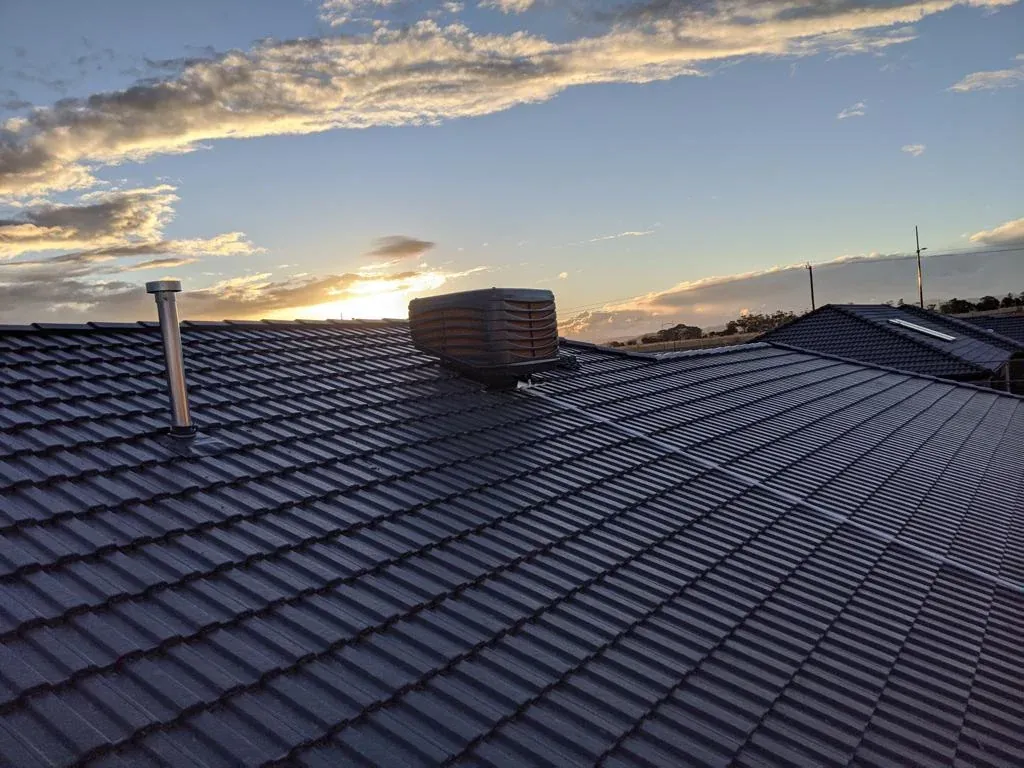
An evaporative cooler sitting on a tiled roof at dusk
Licensed and accredited work by a local team. Read about Pivot Trade Services or see recent jobs across the western suburbs.
Answers
Frequently asked questions
Yes, considerably, because it only runs a fan and a small water pump rather than a compressor. The fair comparison is cost per hour of comfort, not cost per hour of operation. On humid days an evaporative system can run all evening without making the house comfortable, which is not cheap in any real sense.
Enough to let the incoming air out without the house pressurising. A practical rule is to open windows in the rooms you want cooled, roughly a hand span each, and add more if doors start slamming or the flow feels stuffy. Closing off unused rooms concentrates the cooling where you are.
Not directly. Evaporative ductwork is sized for much larger air volumes at lower pressure and the outlets are a different design, so the existing duct is almost never suitable for a refrigerated system. The roof penetration is also different. We quote refrigerated changeovers as new duct systems and price the removal of the old one.
Usually stagnant water in the tray or organic growth on the pads after sitting through winter. A service that dumps and cleans the tray, replaces tired pads and checks the water distribution normally fixes it. If the smell is sharp or electrical, turn it off and call us instead.
Yes. Leaving water in the tray through winter grows biological material and accelerates corrosion. Most units have a drain or a winter setting. A pre summer service that drains, cleans and refills is the tidiest way to handle it if you would rather not be on the roof.
No, the opposite. It draws outside air in continuously, so on a smoke affected day it brings that smoke inside. On those days a refrigerated system running with the house closed up is the better option, which is one reason households with asthma often make the switch.
Book evaporative cooling
Tell us what you need and we will give you a written price, not a range that moves on the day.
- Free
- On-site quotes
- Fixed
- Written pricing
- 100%
- Workmanship guarantee
- 5.0★
- 69 Google reviews