
A realistic path off gas, in the right order
Sustainable Heating and Cooling Options
Most households asking about sustainable heating and cooling are really asking two questions. What has the lowest emissions, and what order should I do things in without wasting money. This page answers both, including the parts where the answer is to leave something alone for now.
- REC 37223
- Melbourne west
- Fixed quotes
The short answer
The lowest emission heating available to a Victorian home is a reverse cycle heat pump running on electricity, because it delivers 3 to 4 units of heat per unit of energy consumed while a gas appliance converts only 80 to 92 percent of its fuel. Pairing heat pump heating and hot water with rooftop solar and running loads during daylight cuts both emissions and bills further. Newer systems using R32 refrigerant carry roughly a third of the global warming potential of older R410A equipment.

Pivot installs across the electrical, HVAC and solar side of this work, which means we look at the house as one system rather than selling you one appliance at a time. Our electrical licence is REC 37223 and our solar accreditation is SAA S3962281.
Why heat pumps are the answer to nearly every question
A heat pump does not create heat, it moves it, which is why it can deliver 3 to 4 units of heat for every unit of electricity it draws. A combustion appliance cannot beat 100 percent by definition, and in practice a gas heater converts roughly 80 to 92 percent of its fuel into useful heat. That gap is why every serious decarbonisation pathway for housing goes through heat pumps.
The same technology covers space heating, cooling and hot water. A reverse cycle system heats and cools the house, and a heat pump hot water unit uses roughly a third of the electricity of a conventional electric storage tank. Between them they typically account for the majority of a household energy bill, which is why they come first and everything else comes later.
Refrigerants, and what R32 changed
Every refrigerated system contains refrigerant, and refrigerants differ enormously in their impact if they escape. Most equipment now sold in Australia uses R32, which has roughly a third of the global warming potential of the R410A it replaced, and systems using it typically need less refrigerant to do the same work.
What matters practically is that the charge stays inside the system. That comes down to installation quality, brazed and pressure tested joints, correct evacuation, and recovering refrigerant properly when equipment is decommissioned rather than venting it. Refrigerant handling requires an ARC licence for exactly this reason. If you are replacing an older R22 or R410A system, the recovery of the old charge is part of the job, not an optional extra.
R32
The current standard on most new domestic equipment. Lower global warming potential and a smaller charge for the same capacity.
R410A
Still common on systems from roughly 2005 to 2020. Serviceable, but higher impact if it leaks.
R22
Phased out. If your system runs R22, repair economics are poor and replacement is usually the sensible call.
Recovery
Old refrigerant must be recovered under ARC licence when equipment is removed. Venting it is both illegal and pointless.
Running your heating and hot water on your own solar
Electrifying heating and hot water changes the shape of your electricity use, which changes what solar is worth to you. Exported energy earns very little now, so the value is in self consumption, using the power while your roof is making it.
That is easy to arrange with hot water. A heat pump hot water system on a timer that heats in the middle of the day runs largely on your own solar, which is a much better outcome than the traditional overnight controlled load approach. Space heating is harder because you want it in the morning and evening. Pre heating the house in the early afternoon on a sunny winter day helps more than people expect, particularly in a home with reasonable insulation and thermal mass.
The order to do things in
The building envelope comes first because it reduces the size of everything you buy afterwards. Ceiling insulation, sealing obvious draughts, and fixing separated or crushed ductwork all reduce the capacity you need. Doing that after buying equipment means paying for capacity you did not need.
Then the appliances, usually heating first because it is the biggest single load, then hot water, then cooking if that matters to you. Once the last gas appliance is gone the gas service can be disconnected and the daily supply charge stops. Solar sizing is best reviewed at the end, when you know what the electrified household actually consumes, rather than guessed at the start.
What we will tell you not to do
Do not replace equipment that is working well just because a newer version exists. A ten year old reverse cycle system in good condition is not an environmental problem, and the emissions and cost of manufacturing a replacement are real. Service it, keep it running, and replace it when it fails.
Do not oversize on the theory that bigger is greener. An oversized system short cycles, runs inefficiently and costs more to buy. And do not disconnect gas before the replacement appliances are installed and commissioned, because reconnection is expensive and winter is not the time to find out the sequencing was wrong.
On the job
Sustainable Heating & Cooling Options in Melbourne's west
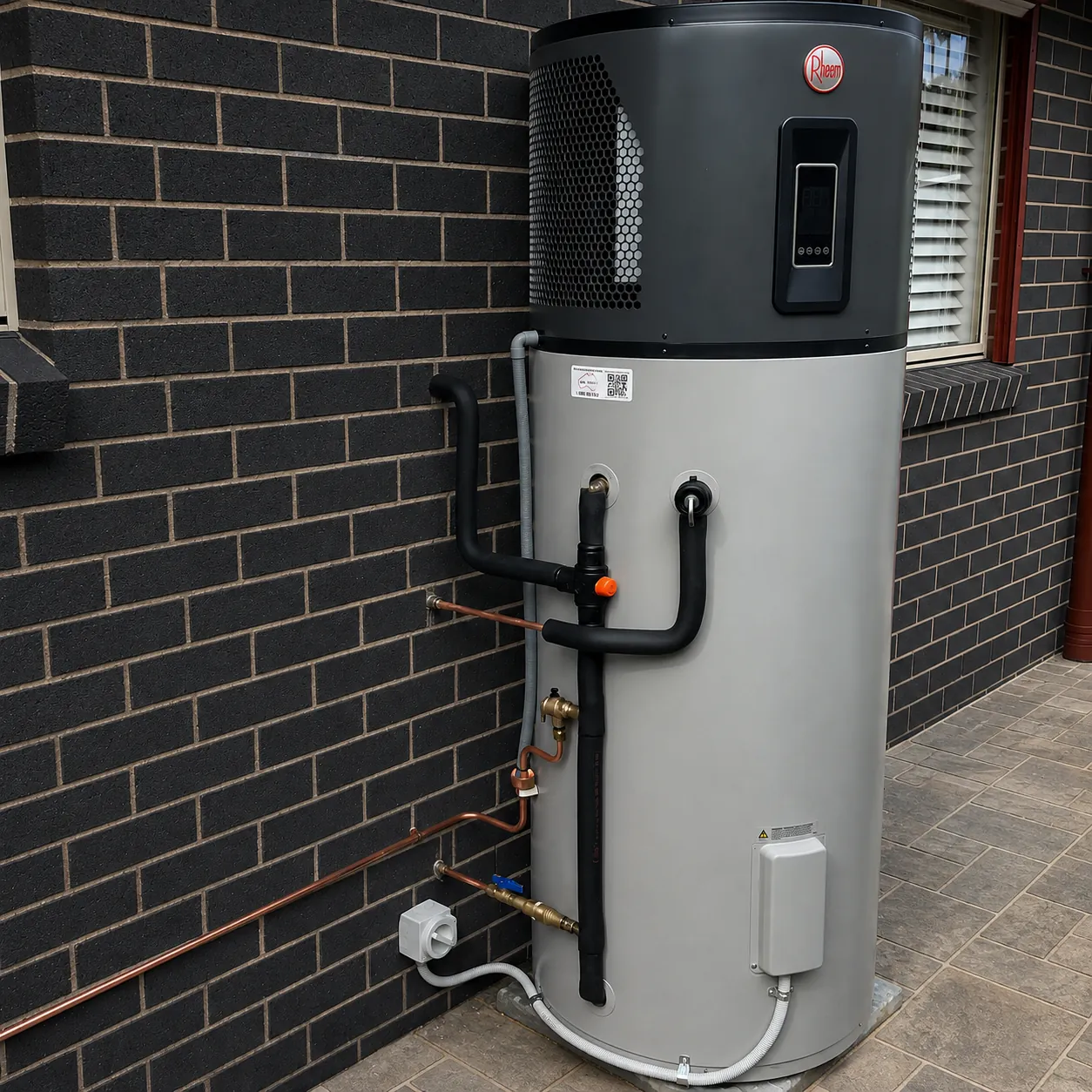
New electric heat pump replacing an old, expensive gas hot water unit 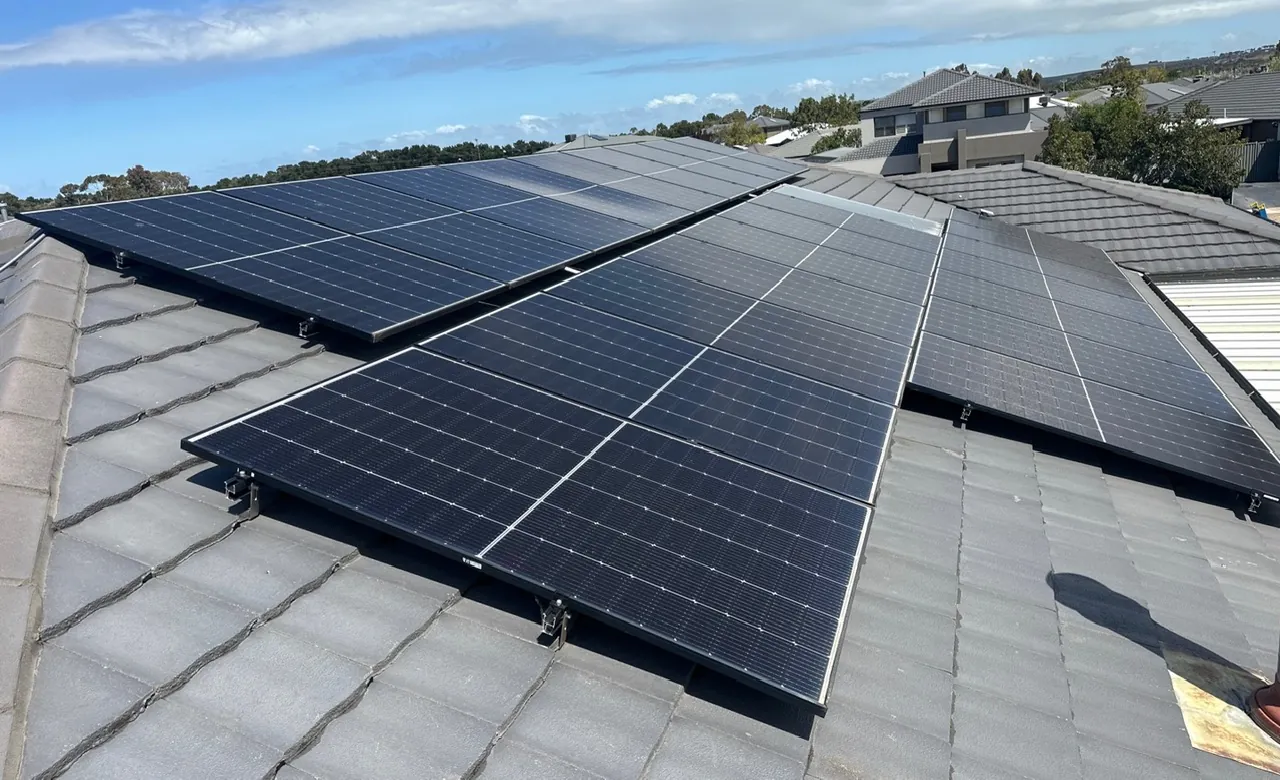
Panels fixed to a tiled roof, laid out for the best run of sun 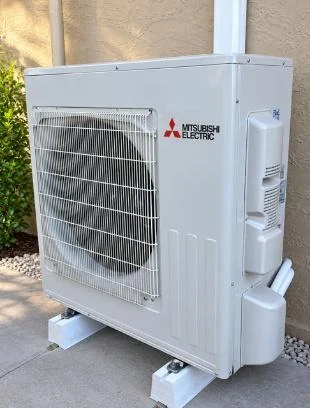
Outdoor units set on level mounts, clear of the fence line
Licensed and accredited work by a local team. Read about Pivot Trade Services or see recent jobs across the western suburbs.
Answers
Frequently asked questions
Yes, and the gap widens every year as the grid decarbonises. A heat pump uses roughly a quarter to a third of the energy of a gas heater for the same heat output, so even on the current grid mix it comes out ahead. Running it on your own solar takes the operational emissions close to nothing.
It is a genuine consideration and a manageable one. Modern R32 equipment carries roughly a third of the global warming potential of older R410A and uses a smaller charge. The refrigerant only matters if it escapes, which is a question of installation quality and proper recovery at end of life, both of which are covered by ARC licensing.
Either order works, but sizing solar last gives a better result because you know what the household will actually use. If you are installing solar first, allow headroom for the heating and hot water loads you are about to add, and make sure the switchboard and inverter are not the limiting factor later.
No. The supply charge applies as long as the service is connected, regardless of how little you use. Households often keep the cooktop for a while and accept that cost, then swap to induction later and disconnect. It is a legitimate staged approach, just be clear that the fixed charge continues in the meantime.
Yes. Melbourne overnight temperatures rarely challenge current inverter equipment, which is rated to keep producing useful heat well below zero. Output does fall as it gets colder and there are short defrost cycles on frosty mornings, both of which we account for when sizing rather than pretending they do not happen.
For some houses, particularly new builds and major renovations where the floor is coming up anyway. A heat pump can drive hydronic loops efficiently because they run at lower water temperatures than a gas boiler. Retrofitting it into an existing home is expensive and disruptive, and for most established houses ducted or split reverse cycle gives a better result per dollar.
Book sustainable heating & cooling options
Tell us what you need and we will give you a written price, not a range that moves on the day.
- Free
- On-site quotes
- Fixed
- Written pricing
- 100%
- Workmanship guarantee
- 5.0★
- 69 Google reviews