
Usable capacity, real backup, honest payback
Home Battery Installation in Melbourne’s West
Batteries became genuinely worth considering in Victoria for two reasons, both of which happened recently. The federal Cheaper Home Batteries Program started in July 2025 and takes roughly 30 percent off the price. And the removal of the mandatory minimum feed-in tariff on 1 July 2025 destroyed the value of exporting, which made storing your own solar the better option almost overnight.
- REC 37223
- Fixed written quotes
- 100% workmanship guarantee
The short answer
A 10kWh home battery in Melbourne costs $8,000 to $12,000 installed before rebates and $5,500 to $9,500 after the federal Cheaper Home Batteries Program, which began in July 2025, pays roughly $250 per usable kWh, is about 30 percent off, and tapers above 14kWh. With Victorian export rates under 5 cents and peak import at 30 to 45 cents, batteries now earn their return through self-consumption. Payback is typically 7 to 10 years against a 10 to 15 year expected life.
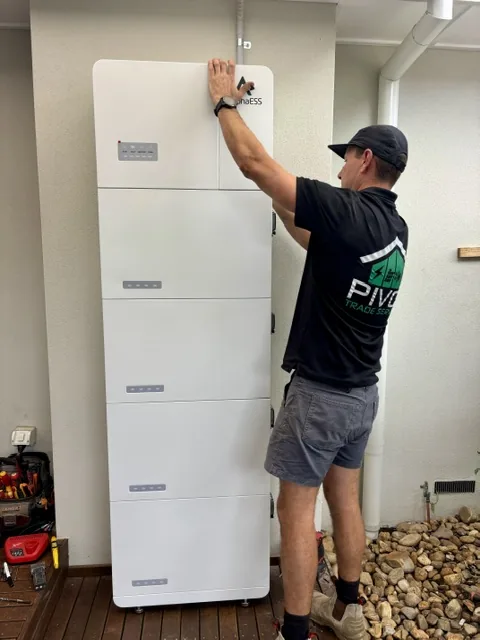
From one of our jobs
Stacking the modules on a home battery install
Photographed on site in Melbourne’s west. REC 37223.
That said, a battery is still the most expensive item on this site with the longest payback, and it is the one where the marketing is furthest from the maths. This page covers what you actually get for the money: usable capacity versus advertised, what backup does and does not do, what a VPP commits you to, and payback numbers we will stand behind.
Usable capacity versus advertised capacity
The number on the box is not the number you get. Advertised or nameplate capacity is the total energy in the cells. Usable capacity is what the battery management system will let you take out, and it is always lower, because discharging cells fully shortens their life dramatically.
On top of that, there are round-trip losses. Energy going in through the inverter and back out again does not arrive in full. So a battery advertised at a given capacity delivers less than that in stored energy, and less again by the time it reaches your power points.
This matters because the federal rebate is calculated on usable kWh, not nameplate. It also matters when comparing quotes. Two batteries advertised at the same number can have meaningfully different usable capacity, so the comparison you want is usable kWh per dollar, plus warranty terms measured in cycles or throughput rather than years alone.
The rebate maths
The federal Cheaper Home Batteries Program has been running since July 2025. It pays roughly $250 per usable kWh, which works out to about 30 percent off a typical installation, or around $2,500 on a 10kWh battery. The discount tapers above 14kWh, so very large systems do not scale the benefit proportionally.
In practice that puts a 10kWh battery at $8,000 to $12,000 installed before rebates and $5,500 to $9,500 after. Like STCs, the discount is handled at point of sale rather than claimed back later, and the system must be installed by an accredited installer to qualify.
The taper above 14kWh is worth planning around. If you are considering a large system, the marginal cost of the capacity above 14kWh is significantly higher than the capacity below it, which changes where the sensible stopping point sits for most households.
Backup, and what it actually does
Most people assume a battery keeps the house running in a blackout. Some do, some do not, and the difference is a wiring decision made at install time, not a feature you can enable later from an app.
Standard grid-connected batteries without backup shut down during an outage. This is a safety requirement, not a fault, because feeding power into a dead network endangers line workers. To keep running you need a backup-capable battery plus a backup gateway or changeover device, which adds cost.
Even then, backup is usually configured to run essential circuits rather than the whole house. That typically means the fridge, some lights, internet and a few power points. Running ducted air conditioning or an oven off backup requires much more capacity and inverter output than most home batteries provide.
Essential circuits backup
A dedicated sub-board carries the loads you nominate. Cheaper, more common, and enough to get through a typical outage comfortably.
Whole-home backup
Possible with the right equipment, but limited by inverter output. Large simultaneous loads will still trip it, so expectations need setting honestly.
Blackout solar recharge
Some configurations let solar recharge the battery during an extended outage. Others do not, and this is worth confirming before purchase rather than during a storm.
Transfer time
Changeover is fast but not always instantaneous. Sensitive equipment may still see a brief interruption unless specifically protected.
VPPs and what you are signing up to
A Virtual Power Plant lets a retailer or aggregator discharge your battery into the grid at times of high demand, in exchange for payments, credits or an upfront discount. On paper it improves the return. In practice you are handing over partial control of an asset you paid for.
Before joining, read the specifics. How many discharge events per year, and can you opt out of individual ones. What state of charge is reserved for you, which determines whether you still have backup during an event. How long is the contract, what happens if you switch retailers, and does participation affect your battery warranty.
We install VPP-capable equipment and configure it for whichever program you choose, but we do not push you into one. For some households the payments are worth it. For others, particularly those who bought the battery mainly for blackout protection, the trade-off is not.
Honest payback
Here is the arithmetic without decoration. Your saving per cycle is roughly the peak import rate you avoid, 30 to 45 cents, minus the export rate you gave up, under 5 cents, multiplied by the usable kWh you actually cycle. A battery that only cycles half its capacity most days saves half as much as the brochure suggests.
On current pricing and current tariffs, payback lands at 7 to 10 years for most households, against an expected life of 10 to 15 years. That is a real return, but it is not spectacular, and it depends on you having enough evening load to empty the battery most days.
The households where batteries do best have solar already, meaningful evening consumption, and either an EV or electric heating and hot water. The households where they do worst are low consumers who bought capacity they cannot cycle. We would rather tell you that before the invoice than after.
Equipment, standards and installation
We install Tesla, BYD and Alpha ESS batteries. Selection depends on whether you need backup, whether you are retrofitting to an existing inverter or replacing it, available wall or floor space, and how the manufacturer warranty is written.
Battery systems must be installed by an accredited installer to qualify for the rebate, grid-connected inverters must comply with AS/NZS 4777.2, and all associated wiring follows AS/NZS 3000 with a Certificate of Electrical Safety issued at completion. Location matters too: batteries have clearance, fire separation and temperature requirements that rule out some garages and internal walls.
| Item | Figure | Notes |
|---|---|---|
| 10kWh battery installed | $8,000 - $12,000 | Before any rebate |
| Federal rebate | ~$250 per usable kWh | About 30 percent off, roughly $2,500 on 10kWh |
| 10kWh battery after rebate | $5,500 - $9,500 | What most households pay |
| Rebate taper | Above 14kWh | Marginal capacity above this is proportionally dearer |
| Typical payback | 7 - 10 years | Assumes the battery is cycled most days |
| Expected service life | 10 - 15 years | Check warranty in cycles or throughput, not just years |
Backup gateways, switchboard work and long cable runs sit outside these ranges and are quoted separately.
Questions to ask before you buy a battery
- 1What is the usable capacity, not the advertised capacity.
- 2Is the warranty written in years, cycles or total throughput, and what capacity is guaranteed at end of term.
- 3Does it provide backup, and is that whole-home or essential circuits only.
- 4Can solar recharge the battery during an extended outage.
- 5Does it require a new inverter, or will it work with the one I have.
- 6What does the VPP contract commit me to, and can I leave.
- 7How many kWh do I actually consume between 5pm and midnight.
How the job runs
- 01
Load profile review
We look at your interval data to see how much energy you use in the evening peak. That number, not the roof size, determines the battery capacity worth buying.
- 02
Backup scoping
If you want blackout capability, we decide together which circuits go on the backup sub-board. This is the decision that is expensive to change later, so we make it deliberately.
- 03
Install and integration
Mounting, DC and AC connections, any inverter change, backup gateway and switchboard work. Location is chosen for clearance, ventilation and temperature, not just convenience.
- 04
Commissioning and tuning
Charge and discharge windows are configured around your tariff, monitoring is set up, and we revisit the settings after the first full billing cycle to correct anything the data shows.
Recent work
Home Battery Installation we have done around Melbourne's west
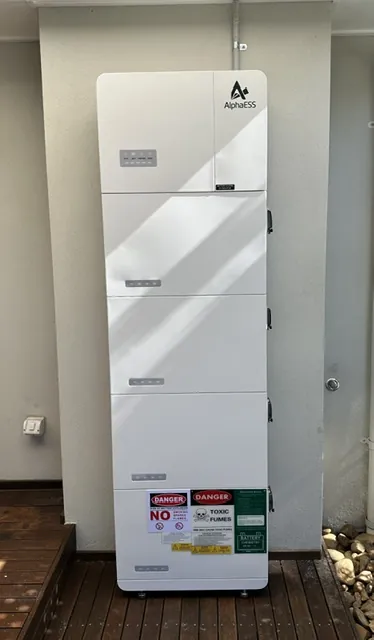
A completed home battery cabinet with isolation labelling 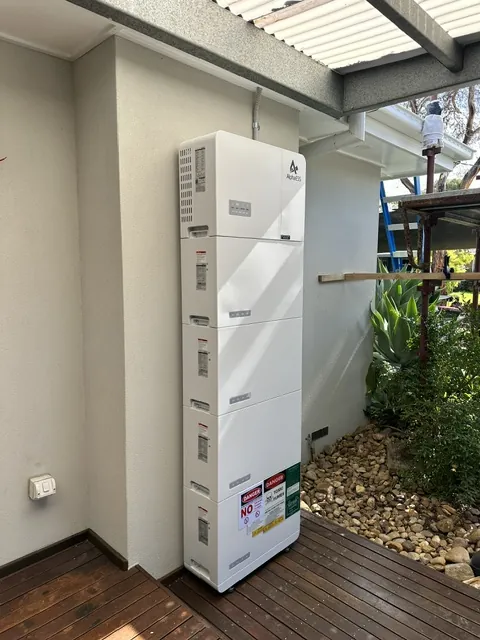
Battery modules stack as your storage needs grow 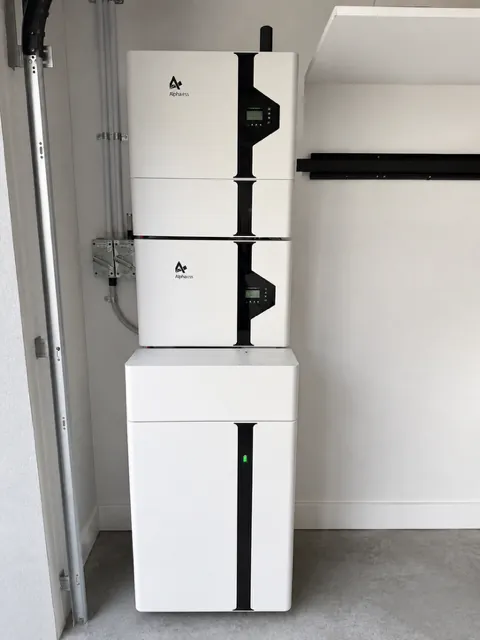
Battery and inverter stacked inside the garage 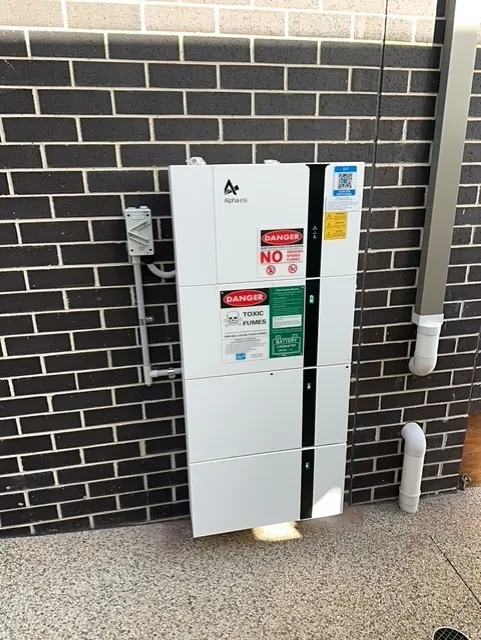
Battery and inverter mounted with full isolation labelling 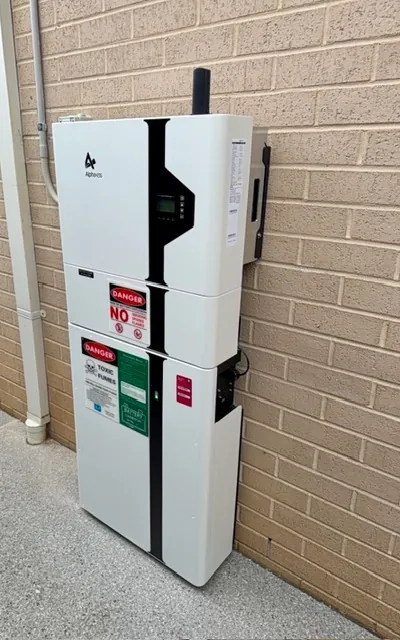
A battery stack tucked down the side of the house 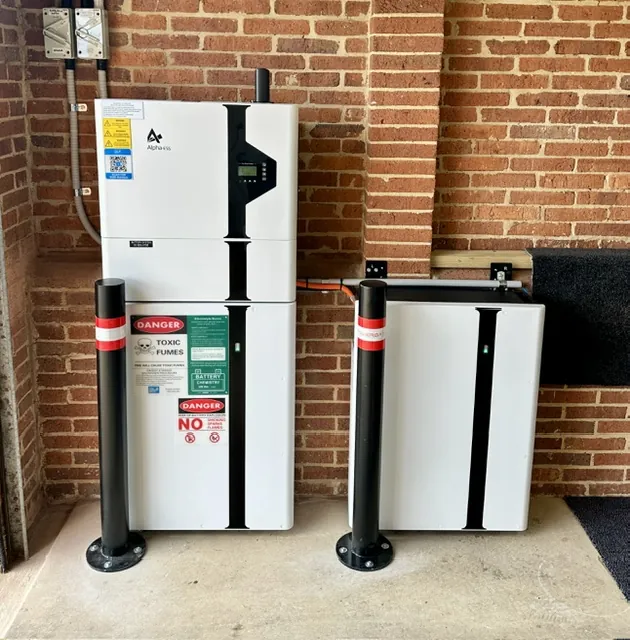
Two cabinets side by side, with bollards to protect them
Photographs from our own jobs. No two switchboards, roofs or run lengths are the same, which is why we quote in writing after seeing yours.
Licensed and accredited work by a local team. Read about Pivot Trade Services or see recent jobs across the western suburbs.
Answers
Frequently asked questions
Usually not. Without solar you are buying grid energy at off-peak rates and using it at peak, so your margin is the difference between two grid tariffs rather than between free solar and peak import. That margin is much thinner and stretches payback well beyond the battery’s useful life in most cases.
Work out how many kWh you consume between roughly 5pm and midnight, then match usable capacity to that. For many western suburbs households it lands between 8kWh and 13kWh. Going larger only pays if you can genuinely cycle it, and the federal rebate tapers above 14kWh, which reinforces the same stopping point.
Often yes. AC-coupled batteries work alongside most existing solar inverters without replacing them. DC-coupled options are more efficient but usually require a hybrid inverter, which means replacing what you have. Which path makes sense depends on the age and brand of your current inverter and whether it is near end of life anyway.
For a normal suburban home, no. Going off grid requires several times the storage and generation you would install for bill savings, plus a backup generator for extended overcast periods. In an area with reliable distribution like Melbourne’s west, staying connected is far cheaper than the equipment needed to leave.
Lithium batteries do not stop working, they lose capacity gradually. A good warranty states a guaranteed retained capacity at the end of its term, typically expressed as a percentage. That figure is more useful than the headline warranty length, because it tells you what you will actually have to work with in year ten.
Modern lithium iron phosphate chemistries used in home storage are chemically stable and the installation standards are strict about location, clearances and separation from habitable rooms and exit paths. The genuine risks come from non-compliant installation and unapproved equipment, which is why accredited installation and approved product lists exist.
Almost none physically, but it does need attention. Keep the ventilation clear, check the monitoring occasionally, and review your charge and discharge settings whenever your tariff or household routine changes. A battery configured for a tariff you no longer have is one of the more common reasons a system underdelivers.
No. The federal Cheaper Home Batteries discount requires the battery to be VPP-capable, but it does not require you to actually join a program. Plenty of households take the rebate, install VPP-ready equipment, and never enrol. You can also join later if a program eventually offers terms you are comfortable with.
Get a fixed quote on home battery installation
Tell us what you need and we will give you a written price, not a range that moves on the day.
- Free
- On-site quotes
- Fixed
- Written pricing
- 100%
- Workmanship guarantee
- 5.0★
- 69 Google reviews