
Whole home warmth from one electric system
Reverse Cycle Ducted Heating for Melbourne Homes
Most houses we look at in Altona, Yarraville and Point Cook were built around a gas ducted furnace, a run of flexible duct in the roof or under the floor, and one thermostat in the hallway. The layout is sound. What has changed is the price of the fuel going into it, and the fact that a burner can never give you more energy than you paid for.
- REC 37223
- Melbourne west
- Fixed quotes
The short answer
Reverse cycle ducted heating warms a whole house from one outdoor compressor and an indoor fan coil, delivering roughly 3 to 4 units of heat for every unit of electricity used. A gas furnace converts only about 80 to 92 percent of its fuel to heat. Running costs sit near 28 to 36 cents an hour per room against 50 to 72 cents for ducted gas, saving most Victorian households roughly $200 to $450 a year. Victorian Energy Upgrades discounts apply on homes at least two years old.
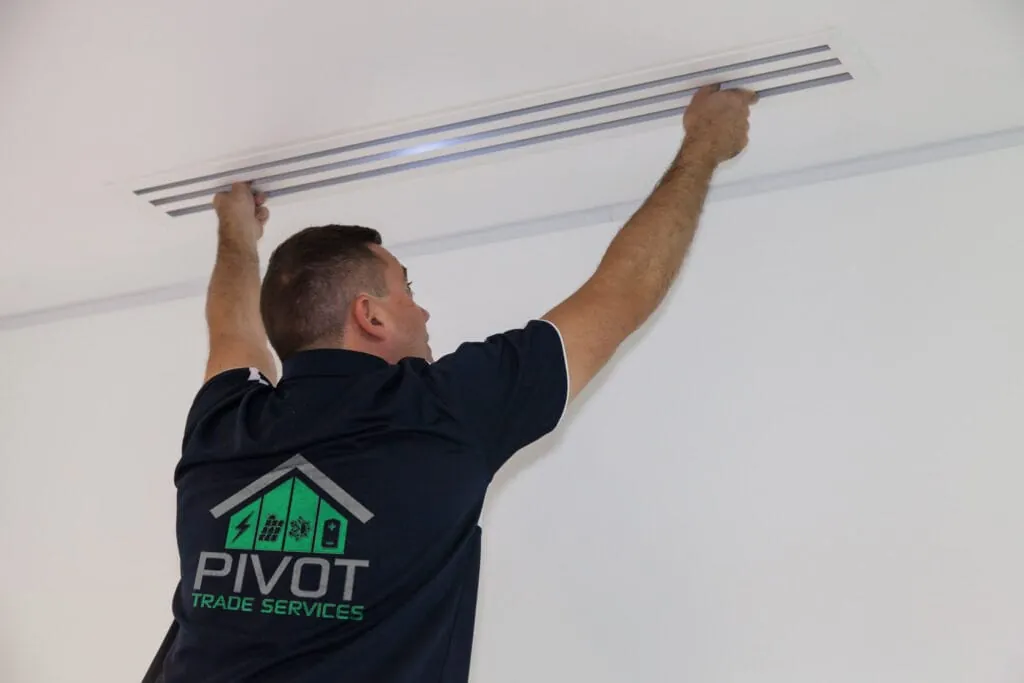
A reverse cycle ducted system keeps the same idea of warm air pushed to every room, but it moves heat rather than making it. That is the whole reason the running cost gap exists. Dan and the team now change over more ducted gas furnaces to reverse cycle than we install any other single piece of equipment, and the conversation almost always starts with a winter bill.
What the system is actually made of
A ducted reverse cycle system has four parts that matter to you. There is an outdoor unit that sits on a slab or brackets somewhere along the side of the house, an indoor fan coil in the roof space or under the floor, the duct network and outlets, and a controller that talks to zone motors. Everything else is detail.
The indoor unit is where the old gas furnace used to live in a lot of changeovers, which keeps the job tidy. The outdoor unit is new territory for gas customers, and its position needs thought because it runs for long stretches in winter and sits close to bedroom windows on narrow blocks.
Outdoor unit
Holds the compressor and the coil that pulls heat out of the outside air. Needs clear airflow on at least three sides and a path for condensate to drain away in winter.
Indoor fan coil
Sits in the roof or subfloor, blows conditioned air into the ducts. Requires access for filter changes and a safety tray with an overflow switch when it is above a ceiling.
Ducts and outlets
Insulated flexible duct sized to the airflow of the new unit. Reverse cycle moves more air than gas, so undersized runs show up straight away as noise and weak throw.
Zone controller
Wall controller plus motorised dampers, so you heat the bedrooms overnight and the living areas in the evening rather than the whole floor plan at once.
Can we reuse the existing gas ductwork?
Sometimes, and we will tell you honestly on site. Gas ducted air leaves the furnace at roughly 55 to 60 degrees, while reverse cycle supply air is closer to 35 to 45 degrees. To deliver the same warmth at a lower temperature, the system has to move considerably more air. Ducts that were fine behind a furnace can become a bottleneck behind a heat pump.
The checks are practical. We look at duct diameter against the required airflow, the condition and R value of the insulation, whether runs have been crushed by storage or foot traffic, and how big the return air grille is. On a lot of 1990s and 2000s homes in Hoppers Crossing and Werribee we keep most of the branch runs, upsize the return air, and replace a handful of outlets. On older or badly sagged systems, new duct is the cheaper answer once you count the callbacks.
Sizing is a heat load calculation, not a rule of thumb
Capacity is quoted in kilowatts, and the right number comes from room volume, insulation, glazing, orientation and how open the plan is. Floor area on its own is a guess. A 20 square metre lounge with a raked ceiling and a west facing sliding door needs materially more capacity than a 20 square metre bedroom with a single window and batts overhead.
Oversizing is the more common mistake. A unit with too much capacity reaches setpoint fast, shuts down, then restarts, which wastes energy, leaves warm and cold patches and shortens compressor life. Undersizing shows up on the three or four genuinely cold mornings a year when the system runs flat out and never quite gets there. We measure, we ask what the house does through the day, and we size to the middle of the sensible range.
Zoning, and heating only the rooms you use
Zoning is where most of the real saving lives. Motorised dampers open and close groups of outlets so the system heats a day zone in the evening and a night zone overnight. Three zones covers the majority of houses we do, typically living, bedrooms and a third for a study, rumpus or the far end of a long floor plan.
One honest limitation. Zoning does not create extra capacity, it redirects it. Every ducted system needs a minimum airflow to run safely, so you cannot run a single small bedroom zone on a large unit without a bypass or a variable speed indoor fan. We design the zone groups so the smallest combination you would realistically use still keeps the unit inside its operating range.
Running costs and where the VEU discount lands
On the numbers we see, a reverse cycle system heats a room for roughly 28 to 36 cents an hour compared with 50 to 72 cents an hour for ducted gas, which lands between $200 and $450 a year for a typical household once you account for the gas supply charge you may also be able to drop.
Victorian Energy Upgrades discounts come off the installation invoice directly, so there is no rebate to claim afterwards and no income test. The property must be at least two years old and the scheme carries a minimum customer contribution of $200 including GST. The program changed on 30 September 2026, so we confirm the current amount in writing at quote time rather than quoting a number that may have moved.
| System size | Typically suits | Installed price guide |
|---|---|---|
| 10 kW ducted, 2 zones | 2 to 3 bedroom single storey, existing duct reused | $9,500 - $13,000 |
| 12 to 14 kW ducted, 3 zones | 3 to 4 bedroom family home, part duct replacement | $12,500 - $17,500 |
| 16 to 20 kW ducted, 4+ zones | Large or double storey home, all new ductwork | $17,000 - $24,000 |
| Gas furnace removal and make good | Changeover jobs | $450 - $900 |
Ranges cover supply, install, electrical connection and commissioning. Victorian Energy Upgrades discounts are applied to the invoice and are confirmed at quote. Final price depends on roof access, switchboard capacity and duct condition.
What a Pivot ducted changeover includes
- 1On site heat load assessment, room by room, before any capacity is quoted
- 2Duct inspection with photos of anything crushed, disconnected or poorly insulated
- 3Safe disconnection and removal of the old gas furnace and flue
- 4Dedicated circuit and isolator installed by a licensed electrician
- 5Refrigeration pipework brazed, pressure tested and evacuated under ARC licence
- 6Certificate of Electrical Safety issued on completion
- 7Zone commissioning and a walkthrough of the controller with whoever runs the house
- 8100% workmanship guarantee on everything we install
On the job
Reverse Cycle Ducted Heating in Melbourne's west
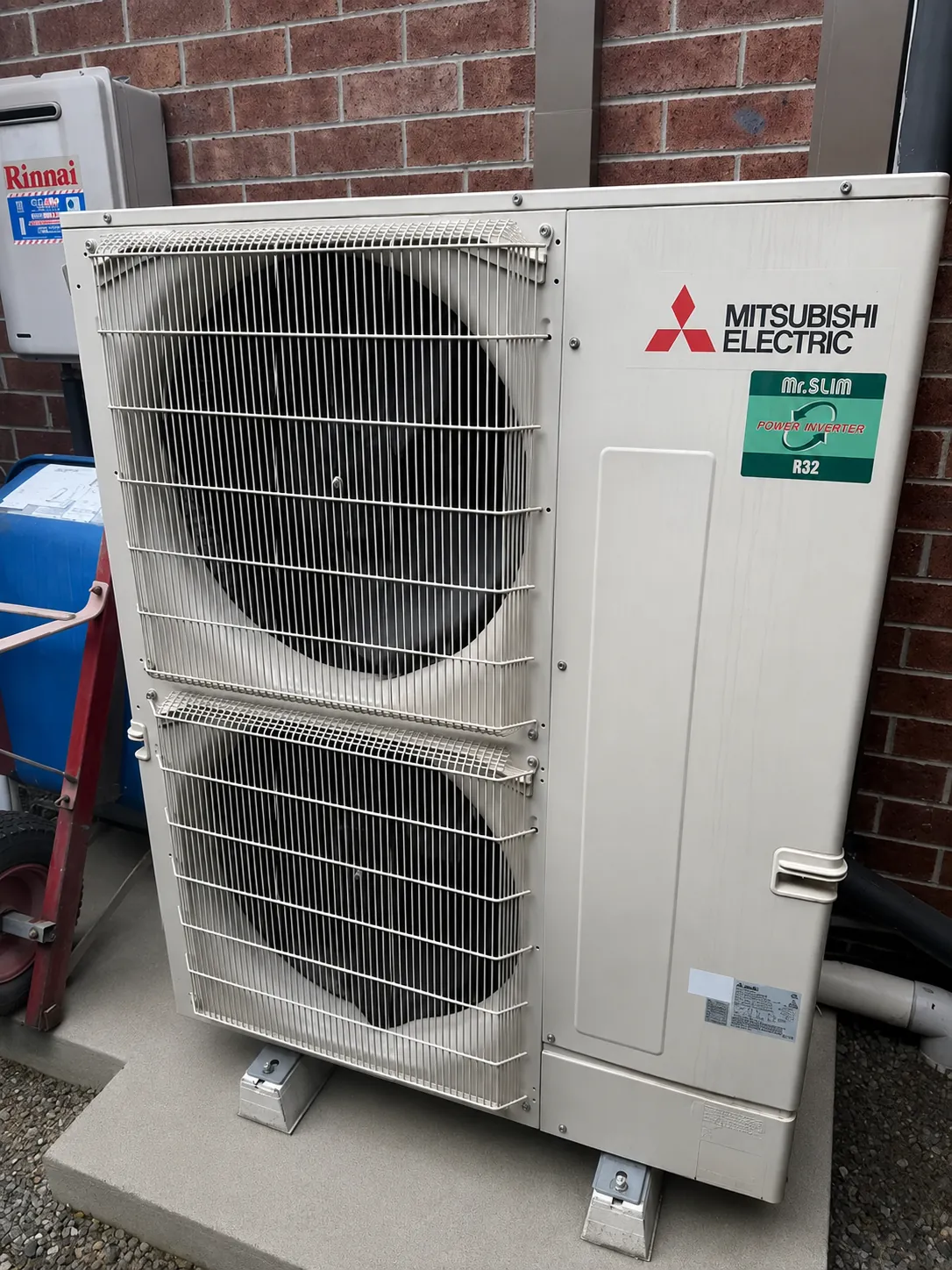
New outdoor split ducted unit replacing an old gas heater 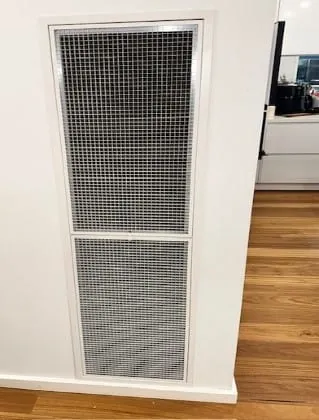
Filters are the cheapest performance upgrade there is
Licensed and accredited work by a local team. Read about Pivot Trade Services or see recent jobs across the western suburbs.
Answers
Frequently asked questions
You can, but it is rarely worth it. Keeping the gas unit means keeping the gas supply charge, and once a reverse cycle system is sized properly you will not use the furnace. The exception is a very large or poorly insulated home where a staged approach makes sense. In that case we leave the gas connected for one winter and reassess.
Yes. Melbourne rarely drops far below zero, and current inverter systems are rated to keep producing useful heat well below that. What you will notice is the defrost cycle. Every so often the outdoor unit reverses briefly to clear frost off its coil, the indoor fan pauses, and steam comes off the outdoor unit. It lasts a few minutes and is normal operation.
A straightforward furnace changeover reusing existing duct is usually one to two days. Full duct replacement, extra zones or a switchboard upgrade pushes it to three days. We give you a firm schedule before we start and we do not leave a house without heating overnight in the middle of winter.
A ducted system needs its own dedicated circuit, and larger units may need three phase or a heavier single phase supply. We check the board, the main switch rating and the incoming supply during the quote. If a board upgrade or safety switch is required, it appears as a line item rather than a surprise on the final invoice.
It depends on the house. Ducted gives you one controller, hidden equipment and even temperatures, and it suits homes with roof or subfloor access. Splits are cheaper to install per room, fail one at a time rather than all at once, and let you heat a single room very cheaply. For a three bedroom home where everyone lives in the one open plan area, splits often win on cost.
Modern inverter outdoor units run around 50 to 60 decibels at a metre, which is quieter than a conversation at the fence line. Placement matters more than the rating. We keep units away from bedroom windows and boundary corners that reflect sound, and we use anti vibration mounts on brackets and slabs.
Book reverse cycle ducted heating
Tell us what you need and we will give you a written price, not a range that moves on the day.
- Free
- On-site quotes
- Fixed
- Written pricing
- 100%
- Workmanship guarantee
- 5.0★
- 69 Google reviews