
Light that suits the room, not just the ceiling
Lighting Installation in Melbourne
Good lighting starts with a good design and the right electrical solution. Get the layout, the beam angle and the colour temperature right and a room feels calm and usable. Get it wrong and you end up with a grid of glare in the ceiling, dark benchtops and a bedroom lit like a car park.
- REC 37223
- Melbourne west
- Fixed quotes
The short answer
LED downlight installation in Melbourne typically costs $80 to $200 per light installed, depending on whether an existing halogen fitting is being replaced or new cabling is required. A 6W to 10W LED downlight produces the same light as a 50W halogen and cuts running cost by roughly 80 per cent. Recessed luminaires must meet the clearance and insulation contact requirements of AS/NZS 3000, and old halogen transformers must be removed rather than left in the ceiling.
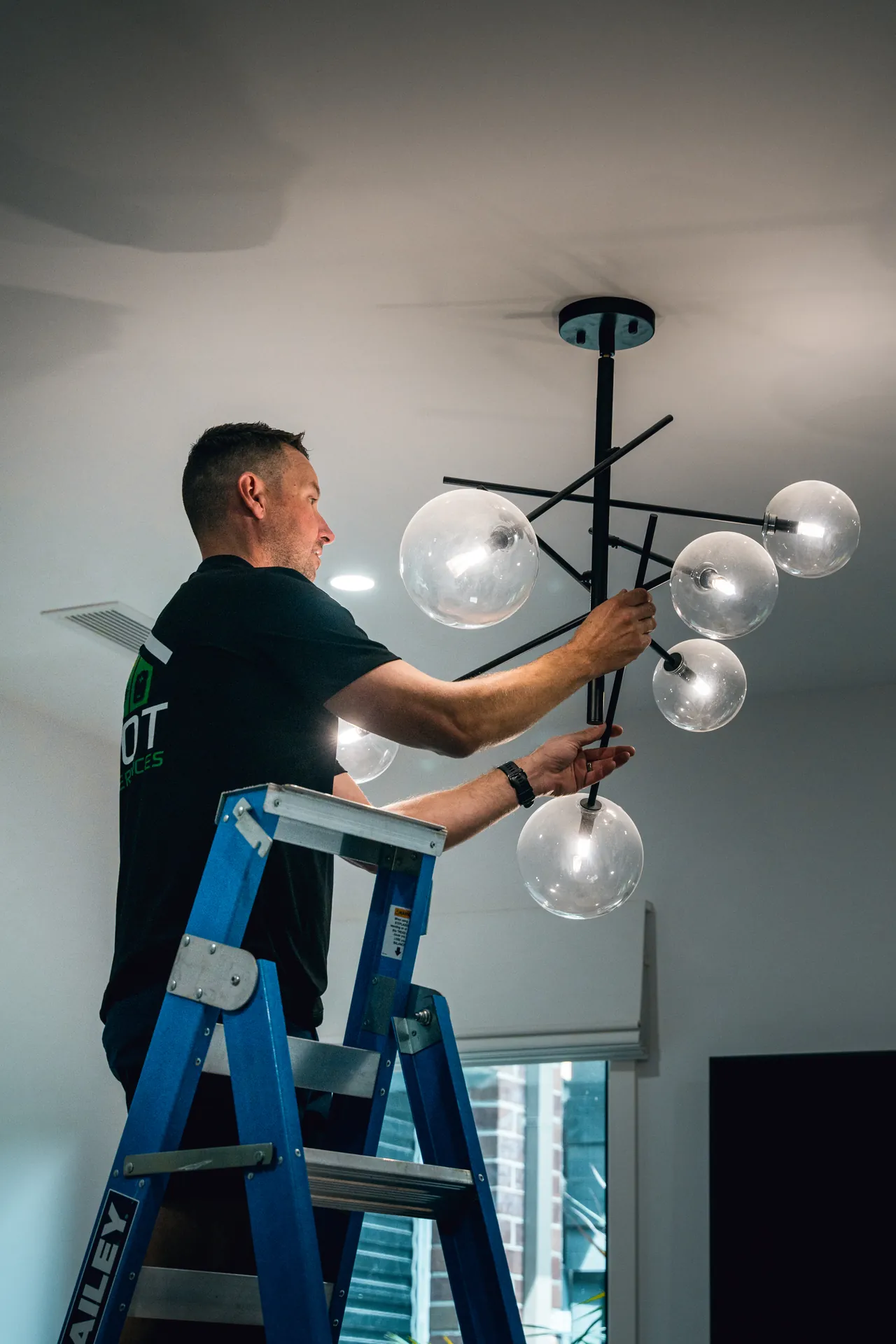
From one of our jobs
Feature pendant fitted and balanced
Photographed on site in Melbourne’s west. REC 37223.
We do straight swaps, full room rewires, outdoor and security lighting, and everything between. What we will not do is put eight downlights in a bedroom because that is what the last house had.
Replacing halogen downlights with LED
Halogen downlights run at around 50W each and get hot enough to be a genuine fire risk where insulation has crept over them. A ceiling with twelve of them is drawing 600W just for light. The LED equivalent draws roughly 100W in total and runs cool.
The part that is often skipped is the old transformer. Each halogen fitting had one sitting in the ceiling space, and when the fitting is swapped, that transformer must come out rather than be left disconnected in the roof. We remove them. If a company quotes a suspiciously cheap price per light, ask them directly whether the transformers are being removed and whether the ceiling space is being checked while they are up there.
Same hole where possible
Most LED units are sized to drop into the existing cut-out, so there is usually no patching or painting.
Transformers removed
Abandoned transformers are taken out of the ceiling, not left sitting on the plaster.
Insulation clearance checked
We look at what is around the fitting. Insulation contact ratings and clearances exist for a reason and they get ignored a lot.
Dimmer compatibility
Old leading edge dimmers usually will not run LEDs smoothly. We check and replace where needed rather than leaving you with buzz and flicker.
Getting the layout right
The most common mistake is treating downlights as a decoration to be spaced evenly. They should be placed where you need light. In a kitchen that means over the front edge of the bench, not centred in the room, because a light directly overhead puts your own shadow on the chopping board.
As a rough starting point, downlights in a living area sit about 1.2 to 1.5 metres apart and roughly 600mm off the walls, but ceiling height, beam angle and wall colour all shift that. We mark the ceiling and let you look at it before a single hole is cut.
Layer the light
General ceiling light, task light where you work, and softer accent light for evening. One layer alone always feels wrong.
Colour temperature
Around 3000K is warm and suits living rooms and bedrooms. 4000K is neutral and works in kitchens, laundries and garages. 5000K and above suits workshops and reads as cold indoors.
Beam angle
Narrow beams for feature and task lighting, wide beams for general room fill. Mixing them is how you avoid a flat, over-lit look.
Watch the wardrobes
Lights placed too close to a wall wash the wardrobe doors and leave the middle of the room dim.
Switching, dimming and controls
Most homes we work in have too few switch points rather than too few lights. Two-way switching at both ends of a hallway, or at the bedroom door and the bed, costs very little at the time and is used every day for twenty years.
Dimming is worth doing properly. LED dimming needs a dimmer designed for the driver in the light, and matching the two is not optional. We keep to combinations we have installed and tested, because the failure mode of a mismatch is flicker at low levels or lights that will not start reliably. Smart switches and app or voice control are straightforward to fit, but we always keep a physical switch that works when the internet does not.
Outdoor, security and garden lighting
Outdoor lighting has two separate jobs and they need different fittings. Security lighting is about detection and deterrence, which means motion sensors positioned to cover approaches without triggering on every passing cat. Garden and entertaining lighting is about being able to use the space after dark, which means lower level, warmer light that does not blind you at the table.
Everything outdoors needs a suitable IP rating and, in bayside suburbs like Altona, Williamstown and Seaholme, corrosion resistance matters. Salt air destroys cheap fittings within a couple of summers. Outdoor circuits require RCD protection, and any new outdoor wiring is installed to the requirements of AS/NZS 3000 for the conditions it is exposed to.
Sensor positioning
Sensors respond best to movement across their field rather than straight at them. Where the sensor points matters more than how sensitive it is.
Path and step lighting
Low, shielded fittings light the ground without glare and are far more effective than one bright floodlight.
Photocell plus timer
Dusk to dawn operation with a cut off time gives you security lighting without lighting the neighbourhood all night.
Sealed connections
Outdoor junctions are the first thing to fail. Proper glands and enclosures rated for the location are not the place to save money.
How we run the job
For a swap over of existing fittings we work room by room and clean up as we go. For new positions we check the ceiling space first, because joists, ducting, water pipes and existing cable runs decide what is actually possible. On a plaster ceiling with a roof space above, new lights are usually straightforward. On a raked or concrete ceiling, or a double storey with a floor above, options narrow and we will talk you through them before quoting.
All new and altered lighting circuits are tested and covered by a Certificate of Electrical Safety, and the workmanship carries our 100% guarantee on top of the manufacturer warranty on the fittings themselves.
| Lighting work | Typical installed cost |
|---|---|
| LED downlight, replacing an existing halogen | $80 - $130 each |
| LED downlight in a new position, roof access available | $130 - $200 each |
| Batten or oyster light replacement | $100 - $180 |
| Pendant over a bench or table, existing point | $120 - $250 |
| Outdoor sensor floodlight, existing circuit | $180 - $350 |
| LED dimmer, supplied and fitted | $120 - $220 |
Indicative per-item pricing. Whole-house jobs are quoted as one fixed price and usually work out well below the per-light rate.
On the job
Lighting Installation in Melbourne's west
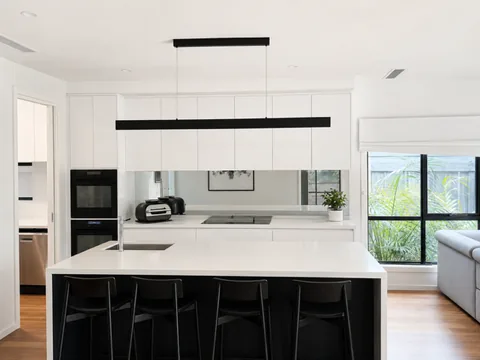
Pendant lighting over a kitchen island 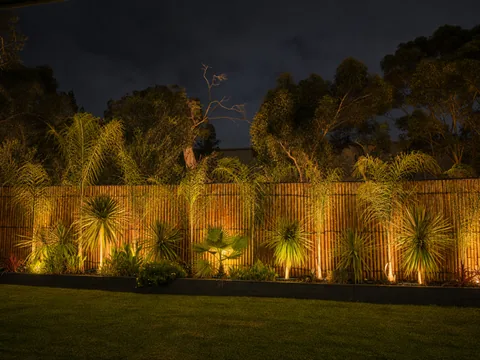
Garden uplighting on a back fence line 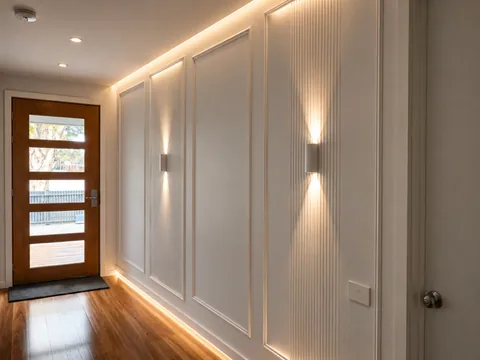
Wall lights along a panelled hallway 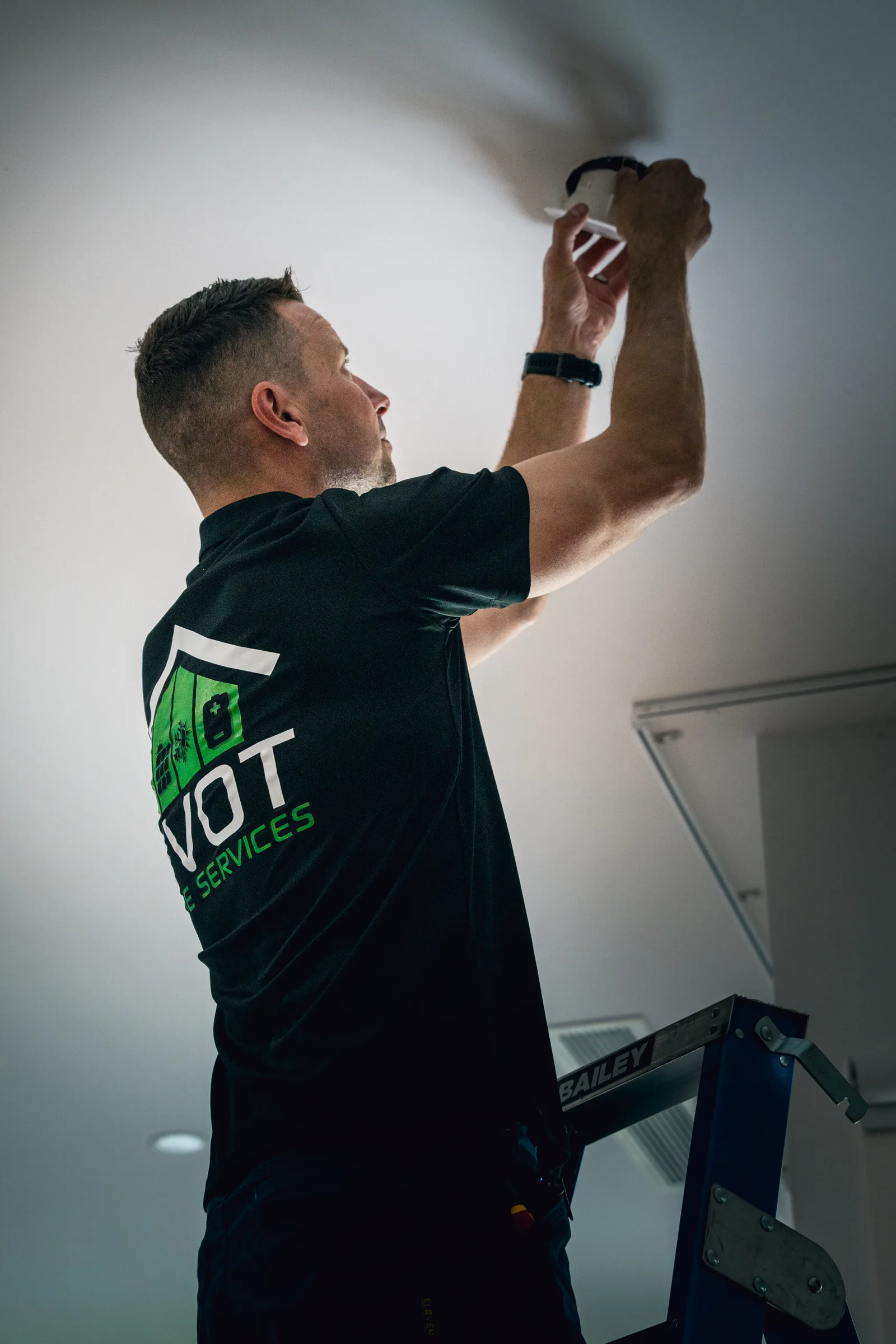
Fitting a downlight in a Melbourne home
Licensed and accredited work by a local team. Read about Pivot Trade Services or see recent jobs across the western suburbs.
Answers
Frequently asked questions
Fewer than most people expect. A 4 by 4 metre bedroom is usually well served by four modern LED downlights, or two plus a bedside lamp each side. A kitchen needs more because of task areas, but they should be positioned over the benches. Modern LEDs put out far more light than the halogens people are used to, so copying the old layout one for one usually leaves a room over-lit.
Only if the fitting is rated for it. Fittings carry markings for insulation contact and there are minimum clearances where they are not rated. Halogen fittings almost never permit contact, and covering them is a genuine fire risk. Many current LED downlights are rated for insulation contact, which is one of the practical reasons to swap before you top up ceiling insulation.
Almost always a mismatch between the dimmer and the LED driver. Older dimmers were designed for the large resistive load of incandescent and halogen lamps and cannot control the tiny load of an LED smoothly. The fix is a trailing edge or LED-specific dimmer matched to the fittings, and sometimes a minimum load device. It is a small job and it makes a big difference.
Yes for anything hardwired. Replacing a lamp or a globe is fine, but disconnecting and connecting a fitting to the wiring is electrical work and must be done by a licensed person in Victoria. Plug-in lamps and track systems on a plug base are the exception. If in doubt, if you have to touch a terminal, it is our job.
For living rooms, bedrooms and hallways, 3000K gives a warm light that suits the evening. For kitchens, bathrooms, laundries and garages, 4000K is clearer for tasks without feeling clinical. Mixing temperatures within a single open plan space looks wrong, so pick one for the connected areas and use lamps for warmth. Some fittings allow you to select the temperature at installation.
They are, in the right places. Scheduling outdoor lighting, dimming a living area without getting up, and turning everything off from one point at night are all genuinely useful. Where they fall down is when a guest cannot turn on a light because it needs an app. We install smart systems that keep normal wall switches working, so the house is never dependent on a phone.
Book lighting installation
Tell us what you need and we will give you a written price, not a range that moves on the day.
- Free
- On-site quotes
- Fixed
- Written pricing
- 100%
- Workmanship guarantee
- 5.0★
- 69 Google reviews