
Rebates & incentives · Updated 3 August 2026
Victorian Energy Rebate Deadlines and Timing, 2026-27
Rebate value in Victoria trends downward over time, not upward. Here is why waiting usually costs you, what actually changes at a financial year boundary, and how to order a multi year upgrade plan.
- 9 min read
- Written for Victoria
- 2026 figures
The short answer
Victorian energy incentive values generally decline over time rather than increase, so acting before a scheduled program change usually beats waiting. Federal STCs are worth roughly $300 to $600 and step down annually. Victorian Energy Upgrades applies a discount to the invoice, requires the property to be at least two years old, has no income test, and changed on 30 September 2026. Solar Homes carries a combined household income cap of $150,000 from 1 July 2026.
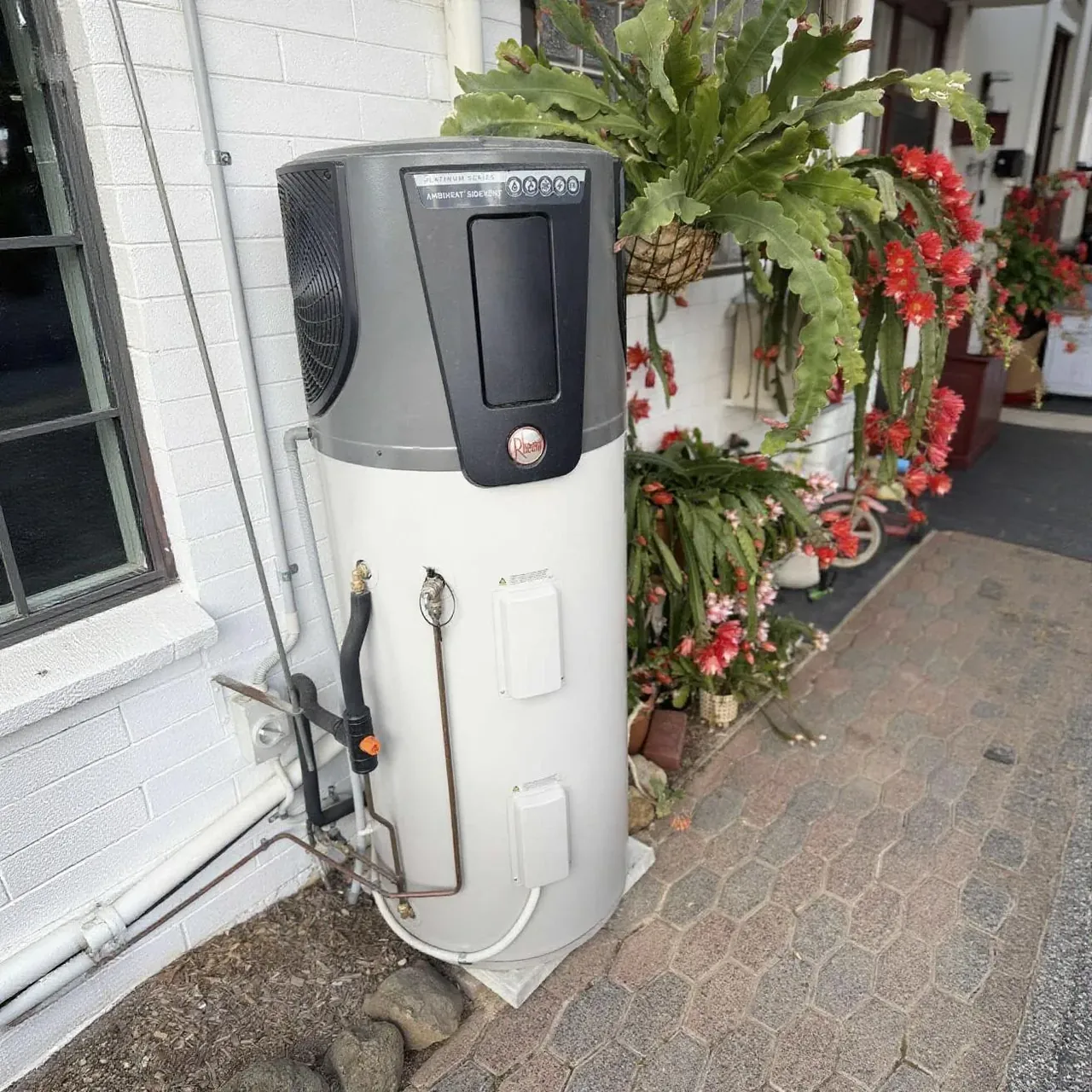
From one of our jobs
Heat pump hot water, swapped in where the old gas unit sat
Photographed on site in Melbourne’s west. REC 37223.
- Solar Homes income cap
- $150,000 from 1 July 2026
- Heat pump hot water rebate
- Up to $1,000 - $1,400
- Federal STCs
- $300 - $600
- VEU minimum contribution
- $200 incl GST
The general rule: earlier beats later
People wait on rebates because they assume a better offer is coming. In this sector that assumption has been wrong more often than it has been right. The direction of travel on almost every incentive is down, because the programs are designed to taper as the technology becomes mainstream and no longer needs the same push.
That is not a sales line, it is how the schemes are built. Federal small scale technology certificates step down on a schedule. Victorian Energy Upgrades certificate values move with a market that reflects supply and demand for the activities in the program. Solar Homes has tightened eligibility over successive years rather than loosened it. A household that waited eighteen months to see whether the offer improved has, in most recent cases, been worse off for waiting.
The counterargument is that equipment prices fall too, and sometimes they do. But equipment prices fall slowly and incentives change in steps, often with only weeks of notice. If a program change is announced for a given date, the risk of waiting is concentrated and the upside of waiting is diffuse. Our Victorian energy rebates overview covers what is currently available across each technology.
How declining certificate values actually work
Two different mechanisms sit behind the phrase "the rebate went down", and it is worth knowing which one you are dealing with.
Federal STCs are created based on the expected generation or energy saving of a system over the remaining years to the scheme deadline. Every year that remaining period shortens, so the same system creates fewer certificates. That is a fixed, scheduled reduction and it happens whether or not anyone announces anything. On a domestic system, STCs are worth roughly $300 to $600 and are normally assigned to the installer and deducted from your price rather than paid to you.
Victorian Energy Upgrades works differently. Certificates are created when an eligible upgrade is installed and are then traded, so the value moves with the market rather than with a schedule. This is why no honest contractor will guarantee a precise VEU figure months in advance. The discount comes off your invoice at the time of installation and the amount is whatever the market supports then. The program changed on 30 September 2026, which is another reason to work from a current written figure rather than a number someone quoted last season.
Battery certificate values follow a similar step down pattern to STCs, reducing over time as the scheme matures. Our home battery rebate guide sets out where that currently sits, and the solar rebates guide does the same for rooftop systems.
Federal STCs
Roughly $300 to $600 on a domestic system. Scheduled annual step down as the remaining scheme period shortens.
Victorian Energy Upgrades
Invoice discount, no income test, property at least two years old, $200 including GST minimum contribution. Value moves with the certificate market.
Solar Homes
Combined household income cap of $150,000 from 1 July 2026. Heat pump hot water rebate up to $1,000, or up to $1,400 for a locally made product.
Battery certificates
Step down over time as the scheme matures, in the same direction as STCs.
Why end of financial year matters for some households
For an owner occupier, 30 June is mostly just a date. Program years for Solar Homes and eligibility criteria such as the income cap are aligned to the financial year, so 1 July is when criteria commonly change, which makes the weeks before it the point at which a known set of rules is about to become an unknown set.
For an investor or a business, the date carries more weight. Depreciation on eligible assets, deductibility of repairs and maintenance, and the timing of a large capital item against the income year all interact with when the work is completed and invoiced, not when it is quoted or ordered. A job that finishes on 28 June and one that finishes on 3 July can sit in different financial years, and for a landlord replacing hot water, heating or a switchboard across a portfolio, that timing is worth a conversation with an accountant rather than with an electrician.
The practical point for everyone is that June is busy. Contractor availability tightens in the run up to 30 June, and it tightens again in the weeks before any announced program change, because everybody has the same idea at the same time. Booking against a deadline you have known about for six months is easy. Booking against one you discovered three weeks out is not.
Lead times, honestly stated
The single most common reason a household misses a deadline is not eligibility, it is time. People treat a program end date as the date they need to make a decision, when it is usually the date the work needs to be completed and documented.
These are the lead times we work to across a normal year, from first contact to a completed job. They stretch in peak season and they stretch further in the weeks before a program change.
| Upgrade | Typical lead time | Peak season pressure |
|---|---|---|
| Heat pump hot water changeover | 2 to 4 weeks | Rises sharply when an old tank fails in a cold snap |
| Rooftop solar | 4 to 8 weeks | Distributor approval and metering add time outside our control |
| Home battery | 4 to 10 weeks | Product availability and approvals are the usual constraint |
| Split system installation | 2 to 5 weeks | Booked out through December to February and again in June to August |
| Ducted heating or cooling changeover | 3 to 6 weeks | Longest waits immediately before and during peak season |
| Switchboard upgrade | 1 to 3 weeks | Often the hidden prerequisite that delays everything else |
Lead times are indicative and depend on product availability, distributor approvals and site conditions. Work backwards from any deadline using the completion date, not the decision date, and add a fortnight of margin.
The prerequisite nobody budgets for
A large share of the deadline failures we see come down to the same thing. The household books a heat pump, a battery, an EV charger or a second air conditioner, the installer arrives, and the switchboard cannot take the new circuit or lacks the protection the new work requires. Now there is a second job to schedule, and the deadline was calculated on the first one.
A switchboard upgrade runs $800 to $3,500 or more depending on scope, and our switchboard upgrade cost guide explains what puts a job at each end of that. It is not wasted money, because a board that can take a heat pump can generally also take the battery, the induction cooktop and the charger. The mistake is discovering the requirement three weeks before a program change rather than three months.
If you know you intend to electrify over the next couple of years, get the board assessed first and get it done once with spare capacity. Doing the same board three times is the most common avoidable cost in this whole category.
A sensible order to sequence a year of upgrades
If you are planning to change more than one thing, order matters, and it is not the order most people pick.
Start with the switchboard, because it is the prerequisite for everything else and because doing it once is cheaper than modifying it repeatedly. Then hot water, because it carries the deepest stacked support of any single appliance swap: Solar Homes up to $1,000 or up to $1,400 for a locally made product, plus a VEU invoice discount, plus federal STCs of roughly $300 to $600. Our heat pump hot water rebate guide and the heat pump versus gas comparison cover that in detail.
Heating and cooling next, ideally quoted in autumn or spring rather than in the middle of a season. A split system replacing gas ducted attracts VEU support and changes running costs immediately, and our gas to electric heating rebate guide sets out how that works.
Then solar, which is a larger job with distributor approval and metering in the timeline, and finally a battery once you know your actual consumption pattern from a year of solar data. Sizing a battery before you have that data is guesswork, and it is the one item on this list where waiting a season genuinely improves the decision.
1. Switchboard
The prerequisite. Do it once, sized for everything you expect to add.
2. Hot water
Deepest stacked incentives available on a single appliance. Quick to install, quick to pay back.
3. Heating and cooling
Quote in the shoulder seasons. Reverse cycle delivers 3 to 4 units of heat or cool per unit of electricity.
4. Solar
Longer lead time because of approvals and metering. Start earlier than you think you need to.
5. Battery
Last, once a year of real consumption data exists to size it against.
What to confirm before you commit
Incentive programs pay out on work done by accredited installers using approved products, and the paperwork has to be right. A cheap quote is sometimes cheap because the product or the installer sits outside the program, in which case the support you were counting on will not appear.
Ask four direct questions. Is the product on the approved list for each program being claimed. Is the discount shown on the quote as a line or promised verbally. Who lodges what, and when. What happens if the certificate value moves between quote and installation. A contractor who cannot answer those cleanly is not one you want handling a claim against a deadline.
And confirm the current rules at the time of quote rather than from a guide, including this one. Program parameters change, sometimes at short notice, and the honest version of rebate advice always includes that sentence.
Pivot Trade Services holds REC 37223, SAA accreditation S3962281 and ABN 87 689 296 937, and we install across Melbourne west from Altona. Every job carries a 100% workmanship guarantee and the net figure after incentives goes on the quote in writing. To get a plan and a timeline against your own deadlines, contact us or call 1300 748 688.
Figures in this guide are indicative and were accurate at the time of writing (3 August 2026). Rebate values, eligibility rules and certificate-linked discounts change regularly. Confirm current amounts with the program administrator, and treat your written quote as the accurate figure for your property.
Answers
Frequently asked questions
Historically no. Incentive values in this sector trend downward as technologies become mainstream, and eligibility has tightened over successive years rather than loosened. Federal STCs step down on a schedule regardless of announcements. If a program change has a date attached, the risk of waiting is concentrated on that date while any benefit from waiting is speculative.
Because certificates are created based on the expected output or saving of a system over the years remaining to the scheme deadline. Each year that remaining period is shorter, so the same system creates fewer certificates. It is a scheduled reduction rather than a policy decision, and it applies whether or not anything else about the program changes.
Because VEU is funded by certificates that are traded, so the value moves with the market rather than being a fixed government payment. The discount is applied to your invoice at the time of installation. The program changed on 30 September 2026, so any figure quoted months ahead is a guess. We confirm the current amount in writing at quote.
For owner occupiers, mainly because program years and eligibility criteria commonly change on 1 July, which makes the weeks beforehand a known set of rules about to become unknown. For investors and businesses it matters more, since asset depreciation and deductibility turn on when work is completed and invoiced. That is a question for an accountant, not an electrician.
Work backwards from the completion date rather than the decision date, and add a fortnight. Hot water changeovers run two to four weeks, split systems two to five, solar four to eight, and batteries four to ten. If a switchboard upgrade turns out to be a prerequisite, add another one to three weeks on top of all of that.
A switchboard that cannot take the new circuit. The household books the heat pump or the battery, the installer arrives, and now there is a second job to schedule that nobody had in the timeline. Having the board assessed before you commit to anything else removes the single largest source of deadline slippage we see.
Switchboard first, because everything depends on it and doing it once is cheaper. Hot water second, since it carries the deepest stacked support. Heating and cooling third, quoted in a shoulder season. Solar fourth, allowing for approvals and metering. Battery last, once a year of real consumption data exists to size it against.
Often yes, because they are separate programs with separate administrators. Solar Homes, Victorian Energy Upgrades and federal STCs can commonly apply to the same heat pump hot water installation. The rules differ for each, particularly the Solar Homes income cap of $150,000 and the VEU requirement that the property is at least two years old.
Browse every cost, rebate and comparison guide in the Pivot guides library, or claim the $60 off your first job voucher.
Want this priced for your place?
Tell us what you need and we will give you a written price, not a range that moves on the day.
- Free
- On-site quotes
- Fixed
- Written pricing
- 100%
- Workmanship guarantee
- 5.0★
- 69 Google reviews