
Rebates & incentives · Updated 3 August 2026
Solar Feed-in Tariff in Victoria (2026 Guide)
Victoria no longer sets a mandatory minimum feed-in tariff, and export value in the middle of the day has collapsed. That does not make solar a bad purchase, but it does change what a good system looks like.
- 8 min read
- Written for Victoria
- 2026 figures
The short answer
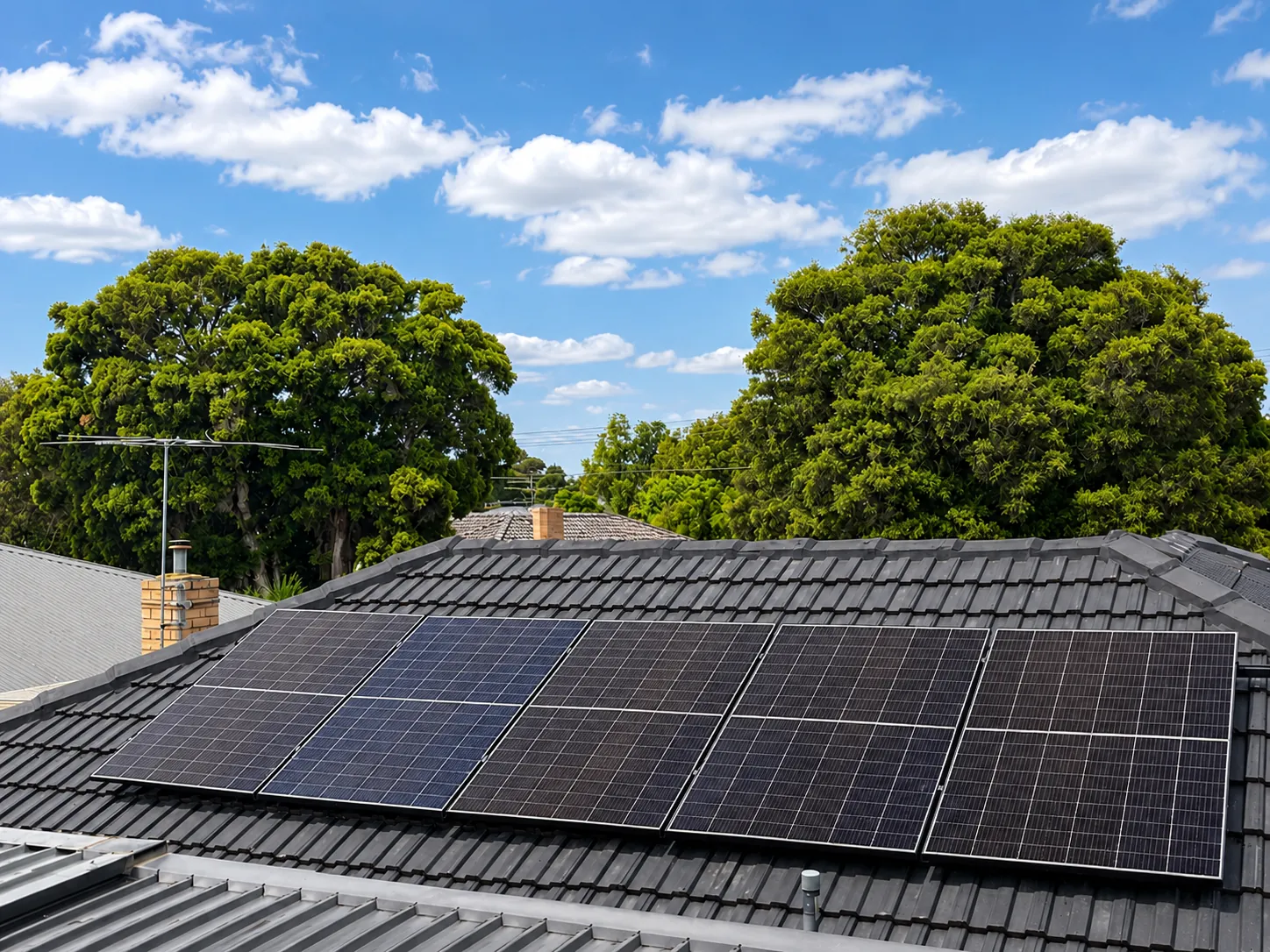
Victoria no longer sets a mandatory minimum solar feed-in tariff, so retailers set their own export rates and there is no floor. Midday export is worth very little because so much solar generates at once, which means solar value now comes from self-consumption rather than export. A quality 6.6kW system in Melbourne costs about $4,500 to $6,500 before incentives and roughly $3,000 to $5,000 after federal STCs, and a 10kWh battery starts from about $5,500 after rebates.
- Minimum feed-in tariff
- No longer mandated
- 6.6kW before incentives
- $4,500 - $6,500
- 6.6kW after STCs
- $3,000 - $5,000
- 10kWh battery
- From about $5,500
What happened to the minimum feed-in tariff
For years Victoria set a mandatory minimum feed-in tariff, a floor price that every retailer had to pay for electricity exported from a home solar system. That floor no longer applies. Retailers now set their own export rates, and there is no regulated minimum underneath them.
The reasoning behind the change is not complicated. A feed-in tariff is meant to reflect the wholesale value of the electricity being exported. As solar penetration has grown, the value of energy delivered into the grid in the middle of a sunny day has fallen close to nothing, because at that moment there is more supply than demand. A mandated floor was increasingly disconnected from what the exported energy was actually worth.
The practical effect for a household is that the export rate is now a feature of your retail offer rather than a regulated entitlement. It varies between retailers, it can change, and it is worth checking on your own bill rather than assuming. Current information on retail offers and Victorian energy programs is published at energy.vic.gov.au.
This is not a reason to avoid solar. It is a reason to stop evaluating solar the way people did a decade ago, when a system was sized to maximise generation and paid for itself by selling surplus.
Why self-consumption now beats export
Every kilowatt hour your panels produce goes to one of two places. It either runs something in your house, or it goes out to the grid. Those two outcomes are worth very different amounts.
A kilowatt hour you use yourself is worth the full retail rate you would otherwise have paid to import it, including the network and market components that make up most of a retail price. A kilowatt hour you export is worth whatever your retailer chooses to pay for it, which in the middle of the day is a fraction of that. The gap between those two numbers is the whole game.
This inverts the old advice. It is no longer about generating the most electricity, it is about consuming the most of what you generate. A household that runs the dishwasher, the washing machine and the hot water heating cycle in the middle of the day extracts far more value from the same array than a household that runs everything at 7pm, even though both systems generate identically.
The single best load to shift is hot water, because it is a large, flexible, thermally stored load. A heat pump set to heat in the early afternoon runs on generation that would otherwise be exported for a few cents, and it uses roughly one third the electricity of conventional electric storage while doing it.
How time of day changes export value
Not all exported energy is equally worthless. The collapse in value is concentrated in the middle of the day, which is precisely when a north facing array does most of its work.
In the late afternoon and early evening, demand rises as households come home and solar output falls away. Electricity is worth substantially more at that point. That is the reason time varying feed-in structures exist, where a retailer pays different rates depending on when the energy is exported, and it is the reason a battery has value even though the energy in it came from your own roof.
It also shapes panel orientation. A west facing array generates less over a year than a north facing one, but more of what it does generate lands in the late afternoon when both your own consumption and the export value are higher. On a roof with limited north aspect, that is not a compromise so much as a different and sometimes better strategy.
| Where it goes | Roughly what it is worth | What it means for you |
|---|---|---|
| Used in the house as it is generated | The full retail rate you avoid paying | The highest value outcome. Load shifting is the cheapest way to increase it |
| Stored in a battery for the evening | The retail rate you avoid at night, less battery cost | Converts near worthless midday export into avoided evening purchase |
| Exported at midday | Whatever your retailer pays, which is low | The default for surplus, and the reason bigger is not automatically better |
| Exported late afternoon | More than midday under time varying rates | Why west facing panels and evening discharge have value |
Victoria no longer sets a mandatory minimum feed-in tariff, so export rates vary by retailer and by offer. Check your own bill and confirm current rates with your retailer. Costs and values change, and a written quote is the accurate figure for any installation.
What this means for system sizing
The old rule was to fit as many panels as the roof and the budget allowed. That rule is not wrong, but the reasoning behind it has changed, and so has the point at which it stops applying.
Panels are still the cheapest component of a system, and a quality 6.6kW system in Melbourne costs about $4,500 to $6,500 before incentives, or roughly $3,000 to $5,000 after federal STCs. Adding capacity to an array being installed anyway is cheap because the scaffolding, the labour, the inverter and the electrical work are already being paid for.
What has changed is the value of the marginal kilowatt. Extra capacity that produces energy you consume is excellent value. Extra capacity that produces energy you export at midday returns very little. So the sizing question is no longer how much roof you have, it is how much of the extra output you can realistically use or store.
For most households the honest answer is that a moderately generous array plus deliberate load shifting beats an enormous array with no behaviour change. The solar rebates guide covers what the incentives are worth, and if you are planning other electrification such as reverse cycle heating or an EV charger, size for that future consumption rather than for what you use today.
What it means for the battery decision
Low export value is the reason home storage makes more sense now than it did when feed-in tariffs were generous. When exports paid well, a battery had to beat a decent guaranteed price for the same energy. Now it only has to beat a very low one.
A battery converts near worthless midday surplus into avoided evening purchase. The value of each stored kilowatt hour is the difference between what you would have paid to import it and what you would have received for exporting it, and that gap is now wide enough to make the arithmetic work for households with real evening consumption.
It is still not universal. A battery needs enough daytime surplus to fill and enough evening load to empty, every day, to earn its cost. The federal discount has lowered the entry price and a 10kWh battery starts from about $5,500 after rebates, which is explained in the 2026 battery rebate guide. Whether it suits your household is a data question, worked through in the Melbourne west battery guide.
Practical changes that are worth more than a better tariff
Shopping for a marginally better feed-in rate is the least productive thing you can do with an afternoon. The gap between retailers on export is small compared with the gap between exporting and self-consuming.
Put the dishwasher and the washing machine on a delay so they run at midday rather than after dinner. Set electric hot water to heat in the early afternoon rather than overnight. Pre-cool the house on a hot day while the sun is up so the air conditioning has less to do at 6pm. Charge the car at home during daylight where the routine allows it.
Each of those converts low value export into avoided purchase at the full retail rate, and none of them cost anything. Households across Altona, Werribee and Sunshine that make these changes get noticeably more out of the same hardware than those that do not.
The other worthwhile check is your retail offer as a whole, not just its export rate. A tariff with a low import rate during the day and a poor feed-in rate can beat one with a generous feed-in rate and expensive import, depending on how your household actually uses power.
Getting advice that reflects how solar works now
A quote built on the assumption that export pays well is a quote from a different decade. What a current assessment should look at is your consumption pattern through the day, what you are likely to electrify next, roof aspect and shading, and whether storage belongs in the plan now or in two years.
It should also look at the switchboard, because an inverter, a battery, a heat pump and a charger all connect to the same board, and doing that work once to a plan costs less than modifying it repeatedly. The switchboard upgrade cost guide covers the scope.
Pivot Trade Services holds REC 37223 and SAA accreditation S3962281, ABN 87 689 296 937, and installs solar across Melbourne west from Altona. Every installation carries a 100% workmanship guarantee on top of the manufacturer warranty. To get a system sized against your actual consumption, contact us or call 0401 500 446 or 1300 748 688.
Feed-in rates, incentive values and eligibility rules all change. Confirm current program details with the administrator and current export rates with your retailer, and treat the written quote as the accurate figure. The Victorian energy rebates hub sets out every program that applies.
Figures in this guide are indicative and were accurate at the time of writing (3 August 2026). Rebate values, eligibility rules and certificate-linked discounts change regularly. Confirm current amounts with the program administrator, and treat your written quote as the accurate figure for your property.
Answers
Frequently asked questions
There is no longer a mandatory minimum. Retailers set their own export rates and there is no regulated floor underneath them, so the rate you receive depends on your retailer and your specific offer rather than on a state wide figure. Check your own bill, and compare offers on the total cost of your usage pattern rather than the export rate alone.
Because the value of electricity exported in the middle of a sunny day has fallen close to nothing. With so much rooftop solar generating simultaneously, midday supply exceeds demand and the wholesale value collapses. A mandated floor price had become disconnected from what the exported energy was actually worth at the moment it entered the grid.
Yes, but the value comes from a different place. A quality 6.6kW system costs about $4,500 to $6,500 before incentives and roughly $3,000 to $5,000 after federal STCs, and it pays for itself through electricity you no longer buy rather than electricity you sell. That makes when you use power as important as how much you generate.
Self-consumption is the share of your generation that runs your own house instead of going to the grid. It matters because a kilowatt hour you use yourself is worth the full retail rate you avoid paying, while the same kilowatt hour exported at midday is worth a fraction of that. Raising self-consumption costs nothing and is the largest available improvement.
Yes. Midday export is worth least because that is when every solar system in the state is generating at once. Late afternoon and early evening exports are worth more, as demand rises and solar output falls. That is why time varying feed-in structures exist and why west facing panels can outperform their annual generation figures on value.
Generally no. Panels are the cheapest part of a system and the labour, scaffolding and electrical work are being paid for regardless, so extra capacity is inexpensive. What changes is the reasoning. Size for the consumption you can realistically shift into daylight hours, plus what you plan to electrify next, rather than for maximum possible generation.
Often, yes. A west facing array generates less across the year than a north facing one, but more of its output arrives in the late afternoon when household demand rises and exported energy is worth more. On a roof with limited north aspect, or a household that is out during the day and home by five, it can be the better arrangement.
Far less than people expect. The difference between retailers on export is small compared with the difference between exporting a kilowatt hour and using it yourself. Shifting the dishwasher, the washing machine and the hot water cycle into daylight hours will do more for your bill than any amount of comparing export rates between offers.
Browse every cost, rebate and comparison guide in the Pivot guides library, or claim the $60 off your first job voucher.
Want this priced for your place?
Tell us what you need and we will give you a written price, not a range that moves on the day.
- Free
- On-site quotes
- Fixed
- Written pricing
- 100%
- Workmanship guarantee
- 5.0★
- 69 Google reviews