
Rebates & incentives · Updated 3 August 2026
Victorian Energy Rebates: The Complete 2026 Guide
Four separate programs support home energy upgrades in Victoria, run by two levels of government with four different sets of rules. This is which one applies to what, how they stack, and where the eligibility traps sit.
- 11 min read
- Written for Victoria
- 2026 figures
The short answer
Four programs support Victorian home energy upgrades in 2026. Victorian Energy Upgrades applies a discount directly to your installation invoice with no income test, on properties at least two years old, with a $200 including GST minimum customer contribution. Solar Homes pays up to $1,000 for heat pump hot water, or up to $1,400 for a locally made product, under a $150,000 combined household income cap. The federal Cheaper Home Batteries program discounts installed batteries, and federal STCs are worth roughly $300 to $600 on hot water.
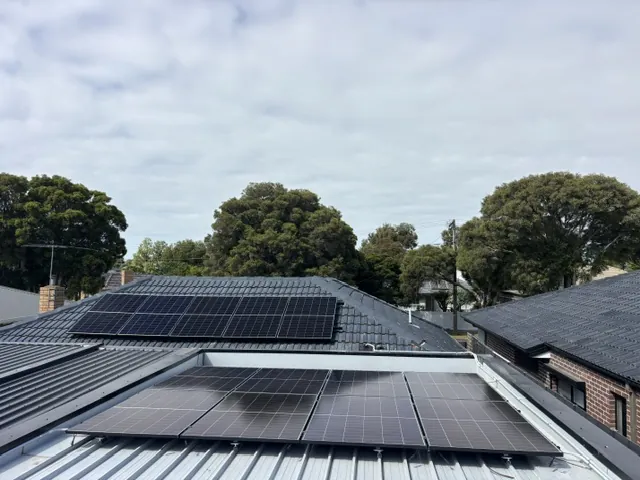
From one of our jobs
A finished rooftop array in Melbourne’s west
Photographed on site in Melbourne’s west. REC 37223.
- Programs available
- 4
- Solar Homes hot water
- Up to $1,000 - $1,400
- VEU minimum contribution
- $200 inc GST
- Solar Homes income cap
- $150,000 combined
Four programs, two levels of government, four sets of rules
Most people arrive at this subject having heard a number. A neighbour got a heat pump for almost nothing. Someone at work says there is a rebate for getting off gas. A sales call quoted a figure that sounded too good and turned out to be. The reason those stories conflict is that there is no single Victorian energy rebate. There are four programs, they are administered by different bodies, and they behave differently on a quote.
Two are state programs and two are federal. Two are applied for, and two arrive as a deduction on the price before you pay it. One has an income test, two do not, and one has an age test on the building. Getting the four straight is the difference between a realistic budget and a disappointment on installation day.
This page is the map. It covers what each program does, which upgrades each one touches, how they combine on a single job, and where the eligibility rules bite. Each individual upgrade then has its own guide with the detail, and those are linked throughout.
Victorian Energy Upgrades (VEU)
A state program that discounts the installation invoice directly. No income test, but the property must be at least two years old and you must contribute at least $200 including GST. Covers heating, hot water, cooling and other efficiency upgrades.
Solar Victoria Solar Homes
A state rebate you apply for. Up to $1,000 for heat pump hot water, or up to $1,400 for a locally made product, with a combined household income cap of $150,000 from 1 July 2026.
Cheaper Home Batteries (federal)
Started July 2025. Reduces the up-front cost of an installed battery, with the discount scaling by usable capacity and declining each year. Covered in the 2026 battery rebate guide.
Federal STCs
Small scale technology certificates. Roughly $300 to $600 on a hot water system, more on solar. Assigned to the installer and taken off the price rather than paid to you.
Which program applies to which upgrade
This is the table people actually want. It is worth reading across rather than down, because the useful question is not what a program is worth in isolation, it is how many programs land on the specific job you are considering.
Hot water is the standout, because all three of the programs that touch it can generally be used on the same system. Heating sits mostly with VEU. Batteries sit almost entirely with the federal program. Solar itself is carried by STCs, which are already inside most advertised prices.
| Program | Who runs it | What it covers | How you receive it | Key condition |
|---|---|---|---|---|
| Victorian Energy Upgrades | Victorian Government | Ducted gas to reverse cycle, split systems, heat pump hot water, other efficiency upgrades | Discount applied directly to the installation invoice | Property at least 2 years old, $200 inc GST minimum contribution, no income test |
| Solar Homes hot water rebate | Solar Victoria | Heat pump hot water systems | Rebate applied for through Solar Victoria | Up to $1,000, or up to $1,400 locally made. $150,000 combined household income cap from 1 July 2026 |
| Cheaper Home Batteries | Federal Government | Installed home batteries | Discount taken off the installed price by the installer | Battery must be VPP capable. Value scales with usable kWh and declines each year |
| Federal STCs | Federal Government | Solar systems and heat pump hot water | Certificates assigned to the installer, deducted from your price | Roughly $300 to $600 on hot water. Value falls annually as the deeming period shortens |
Program values, eligibility and product lists change. VEU in particular changed on 30 September 2026. Every figure here must be confirmed with the program administrator at the time you commit, and the written quote is the number that counts.
How the programs stack on one job
Stacking is the whole point. A single upgrade can attract support from more than one program at once, and the programs are generally designed to sit on top of each other rather than cancel each other out.
Heat pump hot water is the clearest example. A system costs $3,000 to $4,500 supplied and installed before incentives. Solar Homes contributes up to $1,000, or up to $1,400 for a locally made product. Victorian Energy Upgrades applies a further discount straight to the invoice. Federal STCs take off roughly $300 to $600 more. Stacked, most households end up paying from a few hundred dollars up to about $1,500, which is set out in full in the heat pump hot water rebate guide.
Heating stacks differently. Replacing a ducted gas heater with reverse cycle draws on VEU, not on Solar Homes and not on STCs, so the arithmetic has one main lever rather than three. The gas to electric heating rebate guide explains what qualifies and why the figure moves between properties.
Solar and batteries stack federally. STCs are inside the price of a solar system before you see it, and the Cheaper Home Batteries discount comes off an installed battery separately. What has changed the arithmetic most is not the rebates at all, it is export value, which is covered in the 2026 feed-in tariff guide.
Eligibility basics, and the four rules that decide your number
Nearly every disappointed customer we meet was ruled out by one of four things. None of them are obscure, and all of them can be checked before you commit to anything.
Combined household income
Solar Homes carries a combined household income cap of $150,000 from 1 July 2026. Combined, not individual. It is the single most common reason an expected rebate does not arrive. It does not affect VEU, STCs or the battery program.
Age of the property
VEU requires the property to be at least two years old. New builds and recently completed homes are out, which surprises people in the growth suburbs. If your house in Point Cook or Werribee was built last year, check this before you build a budget around it.
The product and the installer
Every program pays only on approved products installed by accredited people. A cheaper quote is sometimes cheaper because the product or the installer sits outside the program, in which case the incentive simply does not exist on that job.
What is already there
Several VEU activities are defined by what is being replaced, not just what is going in. Removing a working ducted gas heater is a different activity to installing a split system in a room that never had heating. The existing appliance is part of the eligibility test.
Why nobody can hand you a fixed rebate figure in advance
This is the part that frustrates people, and it is worth being blunt about. Two of the four programs are funded by tradeable certificates rather than by a fixed government payment. When an eligible upgrade is installed, certificates are created and sold, and the money from that sale is what funds the discount on your invoice.
Certificate prices move with a live market. That means the VEU discount applied to an invoice this month is not necessarily the one applied three months ago, and the STC deduction on a solar quote moves for the same reason. On top of the market movement, the STC calculation shrinks each year because the deeming period gets shorter as the scheme approaches its end date.
The programs themselves also change. VEU changed on 30 September 2026, and the Solar Homes income cap changed on 1 July 2026. Any contractor quoting a precise guaranteed rebate figure months in advance is describing something they do not control. The honest version is a written quote that shows the current discount, dated, with the net amount payable on the face of it. That is what we issue, and if the certificate position moves between quote and installation we tell you before the work starts rather than after.
Current program values and eligibility should always be confirmed with the administrator. Solar Victoria publishes its criteria at solar.vic.gov.au and the Victorian Energy Upgrades program is documented at energy.vic.gov.au.
Where to start, upgrade by upgrade
The right first move depends on what you are replacing and what is failing. These are the paths we see most often across Melbourne west.
If your hot water is on borrowed time, start there. It is the most heavily supported appliance swap available to a Victorian household and a heat pump uses roughly one third the electricity of conventional electric storage. If you are weighing it against a gas replacement, the heat pump versus gas hot water comparison has the running cost detail.
If your ducted gas heater has been condemned or is limping, the changeover to reverse cycle is where VEU does its heaviest lifting. Compare the two systems properly in the gas ducted versus reverse cycle guide, then read the rebate detail. Room by room, a split system is often the cheaper path to the same result.
If you are looking at solar, read the solar rebates guide for what STCs and Solar Homes are worth, then read the feed-in tariff page before choosing a system size, because export value now shapes sizing more than generation does. If you already have panels and are considering storage, start with is a battery worth it in Melbourne west and then the battery rebate guide.
If the bills are the problem rather than a specific appliance, the winter heating bills guide works through the cheap changes before the expensive ones, and energy efficient upgrades covers what we can do inside an existing system.
The switchboard is the thing most people forget
Every program on this page ends with equipment being connected to your switchboard. A heat pump needs a dedicated circuit and isolator. An inverter needs a supply and protection. A battery adds its own requirements. An EV charger adds another. On older homes in Altona, Newport, Yarraville and Footscray, fuse boards and 1980s boards without RCD protection on final subcircuits are still common, and they are the most frequent reason a rebate job costs more than the rebate arithmetic suggested.
None of the four programs pay for switchboard work. It is ordinary electrical work, priced as ordinary electrical work, and it is the line item that most often turns a cheerful rebate number into a larger invoice. The switchboard upgrade cost guide sets out what that involves and what it costs.
The saving here is planning. If you know a heat pump, panels, a battery or a charger are coming in the next few years, say so at the first quote. Doing the board once to a plan is materially cheaper than opening the same enclosure three times. Switchboard work is a straightforward job when it is done once to a plan and an expensive habit when it is not.
How we handle rebate paperwork
The sequence matters, because most of the incentive work happens before the installation rather than after it. A quote should already carry the applicable discounts on its face, so the number you are reading is the number you will pay, not a headline price with claims to follow.
On site we look at what is being replaced, where the new equipment can physically go, the condition of the switchboard, and whether the property and the household meet each program criterion. Then we confirm the current program values, put the net figure in writing, and lodge whatever needs lodging. If a program will not pay on your circumstances, we say so at quote stage rather than at invoice stage.
Pivot Trade Services holds REC 37223 and SAA accreditation S3962281, ABN 87 689 296 937, and works from 11/23-25 Jordan Close, Altona across Melbourne west. Every installation carries a 100% workmanship guarantee on top of the manufacturer warranty. To get an assessment, contact us or call 0401 500 446 or 1300 748 688.
One last caveat, and it applies to every figure on this page. Program values, product lists and eligibility criteria change, sometimes at short notice. Confirm the current position with the program administrator, and treat your written quote as the accurate figure rather than anything you read on a website, including this one.
Figures in this guide are indicative and were accurate at the time of writing (3 August 2026). Rebate values, eligibility rules and certificate-linked discounts change regularly. Confirm current amounts with the program administrator, and treat your written quote as the accurate figure for your property.
Answers
Frequently asked questions
Four programs exist and the number that applies depends on the upgrade. Heat pump hot water can draw on three at once, being Solar Homes, Victorian Energy Upgrades and federal STCs. A ducted gas to reverse cycle changeover mainly draws on VEU. Batteries draw on the federal Cheaper Home Batteries program. Solar is carried by STCs, usually already inside the advertised price.
VEU is an upfront discount applied directly to your installation invoice, with no income test, requiring the property to be at least two years old and a minimum customer contribution of $200 including GST. Solar Homes is a rebate applied for through Solar Victoria, worth up to $1,000 or $1,400 for a locally made hot water product, with a $150,000 combined household income cap.
Rarely. VEU and STCs are handled by the accredited installer and shown as a deduction on your price, so there is nothing to claim afterwards. Solar Homes involves an application through Solar Victoria which your installer normally initiates or assists with. The one thing you must do yourself is provide honest eligibility information, because that is what the claim is built on.
Only on Solar Homes, which carries a combined household income cap of $150,000 from 1 July 2026. Victorian Energy Upgrades has no income test at all, which makes it the most broadly available program. Federal STCs and the Cheaper Home Batteries program are tied to the equipment and the installation rather than to what the household earns.
Because two of the four programs are funded by tradeable certificates whose value moves with a live market rather than by a fixed government payment. A written quote shows the discount current on the day it is issued. The VEU program was also commencing 30 September 2026, so a figure remembered from last year is not a reliable guide to this year.
Not for Victorian Energy Upgrades, which requires the property to be at least two years old. That rules out a lot of recently completed homes in the growth corridors around Point Cook, Werribee and Hoppers Crossing. Federal STCs and the battery program do not have that restriction, so solar, batteries and hot water certificates can still apply to a new house.
Often yes, but the rules differ by program and by who applies. VEU is tied to the age of the property rather than the income of the occupier, which makes it the most commonly available on tenanted homes. Solar Homes has separate rental provisions and criteria. We work through which applies to your specific situation before quoting anything.
No. None of the four programs pay for switchboard upgrades, circuit work or isolators, even though most rebate jobs require some. That is ordinary electrical work priced separately, and on older western suburbs homes it is the most common reason a final invoice is larger than the rebate arithmetic suggested. Ask for it to be assessed before you sign.
Related guides
Browse every cost, rebate and comparison guide in the Pivot guides library, or claim the $60 off your first job voucher.
Want this priced for your place?
Tell us what you need and we will give you a written price, not a range that moves on the day.
- Free
- On-site quotes
- Fixed
- Written pricing
- 100%
- Workmanship guarantee
- 5.0★
- 69 Google reviews