
Period homes, modern storage
Home Battery Installation in Williamstown
Williamstown work is heritage work, and a battery is no exception. Most of what we do here starts with a proper look at what is actually behind the walls and where an eighty-kilogram wall-mounted unit can legally and sensibly go.
- Williamstown 3016
- Jemena network
- REC 37223
The short answer
Home battery installation in Williamstown is limited less by the equipment than by the buildings. Narrow heritage frontages, no off-street parking and few garages mean finding a compliant position with the required clearances and fire separation is the first task. Williamstown is a Jemena address, so the battery inverter needs a Jemena application. Heritage roofs also limit solar to 3kW to 6.6kW here, which caps the daily surplus and points to 8kWh to 10kWh usable capacity rather than larger systems.
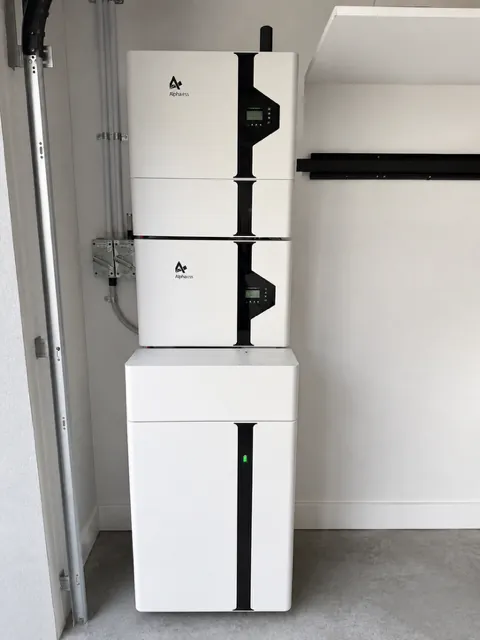
From one of our jobs
Battery and inverter stacked inside the garage
Photographed on site in Melbourne’s west. REC 37223.
That is a harder question than it sounds in a suburb of narrow frontages, rear laneways and homes that never had a garage. It is usually solvable, but it is solved on site, not from a floor plan or a phone conversation.
Finding a compliant position
Battery installation standards set clearances around the unit, require separation from habitable rooms and exit paths, and impose temperature limits. In a period cottage with no garage, a narrow side passage and rooms on the other side of every external wall, those requirements do a lot of work.
The answers we usually find are a rear lean-to or laundry wall, a carport or shed at the rear if one exists, or an external position with proper weather protection on a wall that does not back onto a bedroom. Occasionally the answer is that a wall-mounted unit will not work and a floor-standing option in a rear structure is better. That is a real outcome and worth knowing before you pay a deposit.
Not next to a bedroom
Fire separation requirements rule out walls shared with habitable rooms, which is most walls in a terrace.
Not blocking an exit
Positions beside or across an exit path are excluded, and in narrow homes that removes several otherwise convenient walls.
Weight and wall structure
A wall-mounted battery is heavy. Period timber-framed and single-brick walls need assessing before anything is hung on them.
A smaller array means a smaller battery
Heritage roofs in Williamstown are slate or heritage tile, cut up by chimneys and dormers, and sometimes restricted by overlays on street-facing elevations. Realistic solar here is often 3kW to 6.6kW, which is a smaller daily surplus than a Point Cook or Altona Meadows roof produces.
Sizing a battery above what the array can actually charge is the most common way to waste money on storage. On a 4kW to 6kW array, 8kWh to 10kWh usable is generally the sensible ceiling. That still covers a typical evening between 5pm and midnight, and it cycles fully most days, which is what drives the return.
What is behind the walls comes first
Period homes here hide rubber-insulated wiring gone hard, unbonded metalwork and switchboards extended piece by piece over decades. A battery installation adds circuits and normally a backup sub-board, and none of that can land on a board that is already improvised.
We inspect before designing. Where remediation or a board upgrade is needed it runs $800 to $3,500 or more, and all of it is certified under AS/NZS 3000 with a Certificate of Electrical Safety. On a heritage home this part of the job is not optional and it should never be a surprise on install day.
Backup value and Jemena approval
Backup is worth more to some Williamstown households than the bill savings are, particularly in homes with medical equipment or a home office. Essential circuits backup, a sub-board carrying the fridge, lights, internet and a few power points, is the common and sensible configuration.
Williamstown is a Jemena address, unlike Seaholme and Altona nearby which are Powercor. A battery inverter is a grid-connected inverter under AS/NZS 4777.2, so Jemena needs an application before it is energised. On price, a 10kWh battery is $8,000 to $12,000 installed before rebates and $5,500 to $9,500 after the federal program at roughly $250 per usable kWh.
On the ground
Williamstown battery notes
- Most period homes here have no garage, so the compliant battery position is usually a rear lean-to, laundry wall or outbuilding rather than the obvious internal wall.
- Wall structure matters. Single-brick and timber-framed heritage walls need assessing before a wall-mounted unit weighing eighty kilograms or more is fixed to them.
- Heritage roofs limit solar to roughly 3kW to 6.6kW, which caps the daily charging surplus and makes 8kWh to 10kWh usable the sensible battery size for most homes.
- Williamstown is Jemena while Seaholme and Altona a short distance away are Powercor. The battery inverter application follows the address, not the postcode’s neighbours.
Licensed and accredited work by a local team. Read about Pivot Trade Services or see recent jobs across the western suburbs.
Answers
Williamstown questions
Usually a rear lean-to or laundry wall, a carport or shed at the rear, or an external position with weather protection on a wall that does not back onto a habitable room. Clearances, fire separation and exit path rules all apply. In some Williamstown homes the answer is a floor-standing unit in a rear structure rather than a wall mount.
It needs checking. Wall-mounted batteries commonly weigh eighty kilograms or more, and period single-brick or timber-framed walls were not built with that in mind. We assess the structure before committing to a position. Where a wall is unsuitable, a floor-mounted unit on a suitable base is usually the better answer.
Around 8kWh to 10kWh usable. Sizing a battery beyond what your array can charge on an ordinary day is the most common way to overspend on storage. A smaller battery that fills and empties most days returns better than a large one that half fills, and the federal rebate is calculated per usable kWh either way.
Less than it affects solar, because a battery is usually not on a street-facing elevation. Overlays mainly restrict visible hardware, so the practical effect is to push the battery and inverter toward rear or side positions, which is generally where they were going anyway for clearance and temperature reasons.
Jemena covers Williamstown. A battery inverter is a grid-connected inverter under AS/NZS 4777.2, so it changes the inverter capacity at your connection point and needs its own application. Jemena runs a different process from Powercor next door in Seaholme and Altona, so the address determines the paperwork and the timeframe.
Other work we do in Williamstown
- Electrician in WilliamstownPeriod homes, heritage constraints, and what is actually behind the wall
- Solar installation in WilliamstownHeritage roofs, realistic arrays
- EV charger in WilliamstownHeritage frontages, rear lanes and the parking question
- Split system in WilliamstownHigh ceilings, solid walls and a heritage overlay
- Heat pump hot water in WilliamstownHeritage homes, modern appliance, careful planning
Get a Williamstown quote
Tell us the address and what you need. We quote Williamstown 3016 and the surrounding western suburbs in writing, with no obligation.
- Free
- On-site quotes
- Fixed
- Written pricing
- 100%
- Workmanship guarantee
- 5.0★
- 69 Google reviews