
The overlay decides where the panels go
Solar Panel Installation in Newtown, Geelong
Newtown has the best housing stock in Geelong and the tightest rules about changing it. Victorian, Edwardian and interwar bungalows sit inside four heritage overlay precincts, and the overlay treats a solar array on a visible roof plane as an external alteration rather than as equipment.
- Newtown 3220
- Powercor network
- REC 37223
The short answer
Solar in Newtown 3220 is decided by the heritage overlay before it is decided by the roof. Newtown Hill, Newtown West, Newtown Chilwell and Clarkes Hill are overlay precincts, so altering a street facing elevation, including adding panels, generally needs a planning permit from the City of Greater Geelong. Arrays are usually designed onto rear and side planes instead. Roofs here are slate, terracotta and steel at 20 to 35 degrees, and Powercor approves the grid connection.
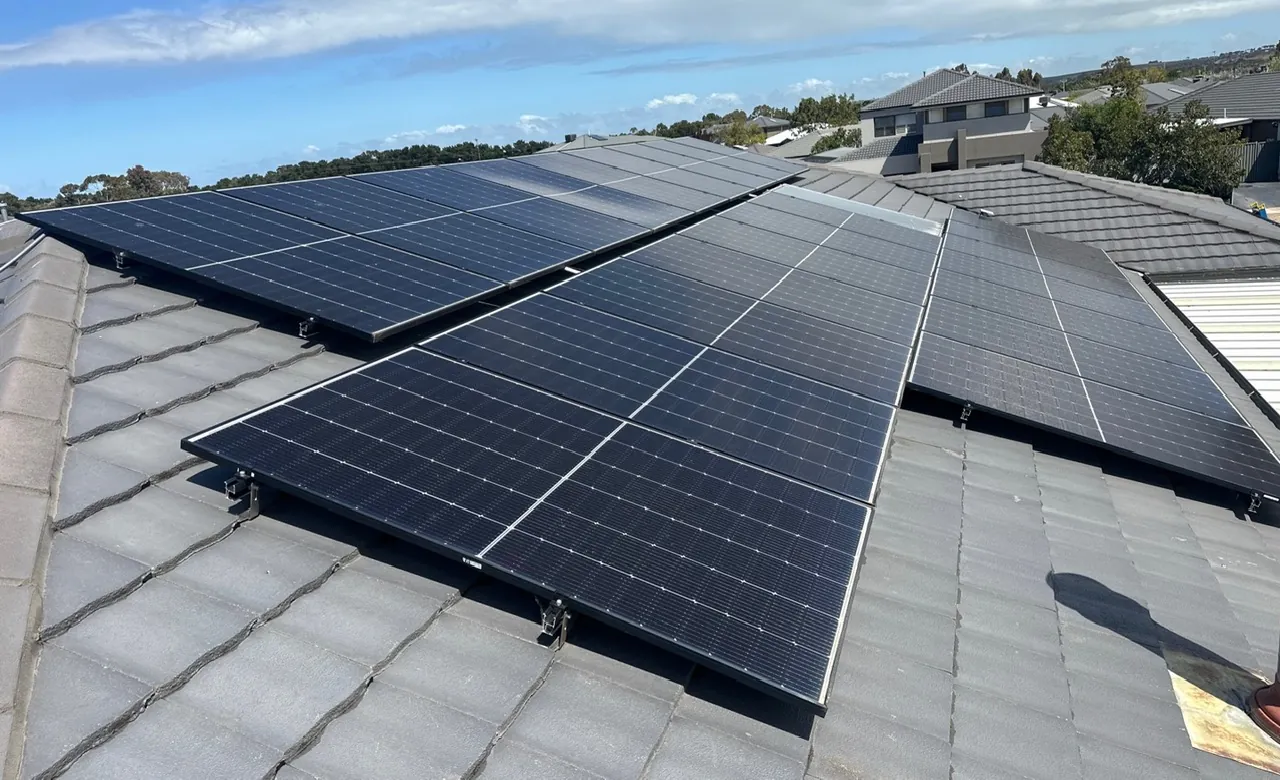
That is not a reason to skip solar here. It is a reason to design it in the right order: work out which planes are exempt from view, measure what they hold, then talk about system size. Doing it the other way around is how people end up with a quote they cannot install.
What the heritage overlay actually restricts
The overlay controls the external appearance of a building as seen from the street. Panels on a rear plane behind a ridge are usually a non event. Panels on the front slope of a Newtown Hill villa are an alteration, and altering a building in an overlay precinct generally requires a planning permit.
The Clarkes Hill precinct alone covers 68 dwellings, of which 54 are graded as heritage significant. That is not a technicality, it is a map of where equipment can and cannot go, and it is worth checking your property against the precinct before anyone quotes a panel count.
Street facing is the test
Visibility from the public realm is what the overlay cares about, not the roof material or the panel brand.
Permits take time, not miracles
Council assessment runs to weeks, so a permit path has to be started before an install date is booked.
Rear planes usually win
A rear or side slope hidden behind the ridge is normally the simplest compliant location, even if it faces east or west.
Slate, terracotta and steel at 20 to 35 degrees
Newtown roofs run steeper than most of Geelong, and the heritage guidelines specify that pitch range and discourage zincalume. Steeper pitch is good for winter yield and awkward for access, so edge protection and setup are a genuine line in the quote rather than padding.
Material decides the mounting. Slate needs slate specific hooks and flashing, not the tile hooks used on a concrete roof. Terracotta is brittle at a century old and needs spares on site. Corrugated steel over original framing is the easiest of the three, provided the rafters check out.
Slate needs slate methods
Standard tile hooks crack slate. Correct hooks and lead flashing cost more and protect an expensive roof.
Carry spare terracotta
Century old terracotta breaks under foot traffic. We allow for replacements instead of calling them a variation.
Steeper means slower
A 35 degree roof needs more setup and edge protection than a 22 degree estate roof of the same area.
What is behind the walls in a pre 1940 house
Housing of this age at this scale usually hides rubber or cotton braided wiring somewhere in the roof space, and a board that was designed for lighting and a radiator rather than for an induction cooktop, a heat pump and a solar circuit.
A solar circuit needs a compliant place to land. Where the board cannot take it, an upgrade runs $800 to $3,500 or more depending on what is behind the cover. We inspect at quote stage so the sequence is known before panels are on a roof and the sun is going down.
Check the roof space first
Old rubber insulation goes hard and crumbles. Finding it before install day changes the plan, not the price twice.
Board upgrades are priced upfront
If the switchboard cannot carry a solar circuit safely, that work is quoted with the system, not added later.
Bonding and earthing checked
Period homes often have metalwork that was never bonded, and that gets corrected before anything new is energised.
Realistic system sizes on a Newtown block
Blocks here run roughly 600 to 900 square metres, which sounds generous until the overlay removes the front plane and a chimney or two breaks up what remains. Realistic outcomes are often 4kW to 6.6kW rather than the 10kW the roof area suggests.
That is still a good system under current Victorian tariffs. With exports paying under 5 cents and peak imports at 30 to 45 cents, a smaller array sized to daytime use returns more than a large one exporting into the middle of the day for almost nothing.
Measure after the overlay
Usable area is what remains once street facing planes and chimney shading are taken out of the calculation.
East and west still work
A split east and west array on rear planes flattens the generation curve, which suits self consumption well.
Shift load into daylight
Hot water and laundry moved into the middle of the day beat adding panels you can only export.
Powercor, rebates and how we schedule Newtown work
Powercor runs the network here, and it is our own distributor in Altona, so the pre-approval and connection process is the one we lodge every week. Powercor decides the connection outcome and any export limit, and we confirm both in writing before the system is energised.
A quality 6.6kW system is $4,500 to $8,500 before incentives and roughly $3,000 to $6,000 after federal STCs worth $2,000 to $3,000. Eligible households can add up to $1,400 through Solar Homes, income capped at $150,000 combined from 1 July 2026. Newtown is about 65km from us, so work here is booked into scheduled Geelong blocks.
Two approvals, not one
A permit job in an overlay precinct needs council and Powercor. They run in parallel and neither is instant.
STCs come off the price
Certificates are assigned to the installer and deducted from the invoice rather than claimed back afterwards.
A week, not an hour
We nominate a week for Geelong jobs and confirm the day closer to the time. No same day attendance from Altona.
On the ground
Newtown heritage notes
- Newtown Hill, Newtown West, Newtown Chilwell and Clarkes Hill are heritage overlay precincts. A planning permit is generally needed to alter an exterior, and panels on a street facing plane count as an alteration.
- Clarkes Hill covers 68 dwellings of which 54 are heritage significant, so the odds that your property is affected are high enough to check before quoting rather than after.
- Roof pitch here runs 20 to 35 degrees in slate, terracotta and corrugated steel, and the guidelines discourage zincalume, so mounting hardware is chosen for the material rather than for convenience.
- Allotments of 600 to 900 square metres usually have a narrow side driveway, so there is access for a cable run, but the gap between wall and boundary is tight for setup.
Licensed and accredited work by a local team. Read about Pivot Trade Services or see recent jobs across the western suburbs.
Answers
Newtown questions
If your property is in one of the heritage overlay precincts and the panels would be visible from the street, generally yes. The overlay treats a visible array as an external alteration. Panels on a rear plane behind the ridge usually avoid the issue entirely, which is why we design to those planes first and check your address against the precinct map before quoting.
Newtown Hill, Newtown West, Newtown Chilwell and Clarkes Hill are the precincts. Clarkes Hill alone covers 68 dwellings, 54 of them graded significant. Coverage is by property rather than by street, so two neighbours can sit under different rules. We check the specific address rather than assuming from the suburb.
Usually, with hooks and flashing made for slate rather than the tile hooks used on concrete. Slate is brittle and expensive to repair, so the mounting method matters more than on any other roof in Geelong. On a few roofs the honest answer is that the slate is too fragile to penetrate, and we say so before quoting.
Commonly 4kW to 6.6kW once the street facing plane is excluded and chimneys are worked around. The block looks big, but the usable roof after the overlay is smaller than the footprint suggests. That size still performs well when it is matched to daytime consumption, which is where solar value sits under current Victorian export rates.
It can. Pre 1940s houses at this scale often have rubber or cotton braided wiring in the roof space and a board never designed for modern load. A solar circuit has to land somewhere compliant, so where remediation is needed we price it with the system. Board work runs $800 to $3,500 or more depending on the inspection.
Powercor, which runs the network across the whole Geelong region and is also the distributor at our own Altona address. Powercor accepts or refuses the connection and sets any export limit based on capacity in your street. We lodge the application before booking the install and confirm the outcome before anything is energised.
Other work we do in Newtown
- Electrician in NewtownOverlay precincts, and what they decide before anything is mounted
- Home battery in NewtownHeritage overlay first, equipment second
- EV charger in NewtownA heritage precinct decides where the unit can go
- Split system in NewtownHeritage overlay first, capacity second
- Heat pump hot water in NewtownA heritage precinct decides where the unit sits
Get a Newtown quote
Tell us the address and what you need. We quote Newtown 3220 and the surrounding western suburbs in writing, with no obligation.
- Free
- On-site quotes
- Fixed
- Written pricing
- 100%
- Workmanship guarantee
- 5.0★
- 69 Google reviews