
Scheduled work in the city, 60km from our Altona workshop
Heat Pump Hot Water Systems in Central Geelong
Central Geelong is a 19th century bluestone and brick commercial core with mid-century offices over the top of it and, since the mid 2010s, apartment towers and large government buildings. Very little of it is a detached house with a side path, which is the arrangement a heat pump is designed around. That single fact decides most hot water conversations in the 3220 postcode.
- Geelong 3220
- Powercor network
- REC 37223
The short answer
Heat pump hot water in central Geelong 3220 costs $3,000 to $4,500 supplied and installed before incentives and uses roughly one third of the electricity of conventional electric storage. Powercor is the distributor. The city core is commercial and apartment stock built hard to both boundaries, so the first question is whether an outdoor position with real airflow exists at all. Waterfront buildings on Corio Bay need coastal grade fixings on anything mounted outside.
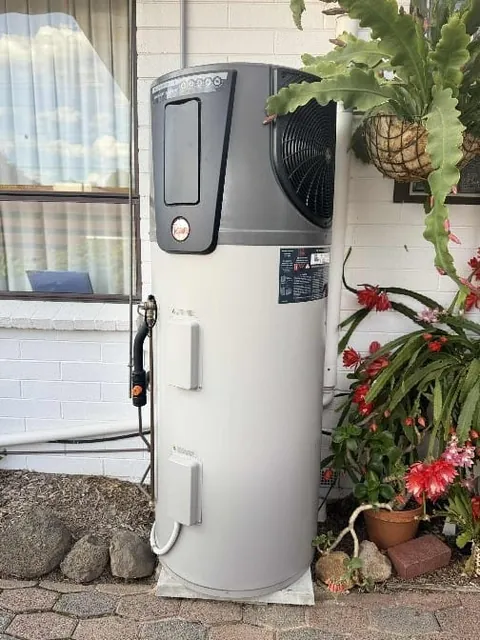
From one of our jobs
Same footprint, roughly a third of the running cost
Photographed on site in Melbourne’s west. REC 37223.
We are based in Altona and travel about 60km to get here, so city work is booked into scheduled blocks and we nominate the week rather than the hour. On a hot water changeover that costs you nothing, because the unit has to be ordered and the position has to be assessed before anyone is on site anyway.
Whether a heat pump can go in at all
A heat pump needs outside air. It draws air across a coil, takes the heat out of it and blows colder air back out, so it needs to breathe on the intake and discharge faces and it needs somewhere for condensate to drain. An apartment with no balcony, no courtyard and no service area physically cannot take one, and no amount of good intentions changes that.
What we look for in the city is a rear courtyard off a laneway, a service area on a podium level, or a ground floor tenancy with a rear yard. Where none of those exist the honest answer is conventional electric storage or a compliant gas replacement, and we will say so rather than quoting a unit that will never run properly in a cupboard.
Rear laneway courtyards
The most common workable position in the city core, because the tight allotments are built to both side boundaries and there is no side path to use.
Owners corporation approval
An external unit on a common property wall or a shared podium needs approval before it is ordered, not after it arrives on the truck.
When we say no
If there is no position with airflow and drainage, we say so at the assessment. A boxed-in heat pump runs badly for its whole life.
Corio Bay salt on a waterfront building
Buildings along the waterfront and on the streets running back from Eastern Beach carry genuine marine salt exposure. It rarely kills the appliance. It kills the fittings around it, which means isolator enclosures, bracket feet, screws and the condenser fins on the outdoor unit. We see the same failures on rooftop solar rail and air conditioning plant on the same buildings.
On a waterfront job we specify a weatherproof isolator rated for the exposure, stainless or coastal grade fixings, and a position out of the direct salt path where the building allows it. A fresh water rinse of the coil each spring costs five minutes and genuinely adds years near the bay.
Coastal grade fixings
Stainless brackets and screws on anything mounted outside within a couple of streets of the water. Standard grade fixings rust out early here.
Sealed isolator
A weatherproof enclosure rated for the exposure, mounted so salt-laden air is not being driven into it every afternoon.
Rinse the coil
Fresh water on the outdoor coil each spring. The cheapest maintenance there is and the one nobody does.
What you pay after the incentives stack
Supplied and installed, a domestic sized heat pump runs $3,000 to $4,500 before incentives, depending on tank size, brand and how much work the changeover involves. Three programs can then apply to the same job. Solar Homes contributes up to $1,000, or up to $1,400 for a locally made product, subject to a combined household income cap of $150,000 from 1 July 2026. Victorian Energy Upgrades discounts the invoice directly, with no income test, on properties at least two years old and with a minimum customer contribution of $200 including GST. Federal STCs are worth roughly $300 to $600.
Stacked, most households pay from a few hundred dollars up to about $1,500. The two year property age test catches a real number of city apartments, because the towers built since the mid 2010s include buildings completed very recently. VEU changed on 30 September 2026, so we confirm the current discount in writing on the quote rather than quoting a figure from memory.
Property age test
VEU requires the property to be at least two years old. Newly completed apartment buildings in the city core do not qualify for that program.
Income cap
Solar Homes carries a $150,000 combined household income cap from 1 July 2026. Combined, not individual, and it is the usual reason a rebate does not arrive.
Net figure on the quote
We show what you actually pay, dated, rather than a headline price with a rebate promise attached to it.
Timers, tariffs and the 2027 replacement standard
The timer is the setting that decides your running cost. Heating in the early afternoon runs the compressor in the warmest air of the day, which is when a heat pump is most efficient, and on a building with solar it uses generation that would otherwise export for a few cents. Geelong overnight temperatures run a little cooler and drier than Melbourne, which makes the midday window worth more here than the old overnight habit.
The other thing worth planning for is the replacement standard. From 1 March 2027, Victorian electrification standards require an existing home replacing an end of life gas hot water system to install an efficient electric system instead. It applies at replacement, not as a forced early upgrade, so a working gas unit can stay. In a building where the outdoor position is genuinely difficult, that is a reason to work out the answer now rather than on the day the old unit fails.
Early afternoon window
Warmest air, best efficiency, and it lines up with whatever solar the building has. We set it at commissioning and show you how to change it.
Off the evening peak
Even without solar, moving the heating cycle out of the evening peak is worth doing on a time of use tariff.
Plan the 2027 answer early
On a tight city site the position question takes longer to solve than the appliance question. Better to have it settled before the tank fails.
On the ground
Central Geelong specifics
- Tight city allotments built hard to the street and both side boundaries mean there is no side path, so the outdoor position is a rear courtyard, a laneway or nothing at all
- Commercial and mixed use buildings dominate, so supply is often three phase and metering is shared across tenancies, which changes which bill the saving lands on
- Waterfront buildings on Corio Bay carry marine salt exposure that shortens the life of isolators, enclosure fixings and condenser fins
- Apartment towers completed since the mid 2010s include buildings under two years old, which fails the Victorian Energy Upgrades property age test
Licensed and accredited work by a local team. Read about Pivot Trade Services or see recent jobs across the western suburbs.
Answers
Geelong questions
Only if there is an outdoor position with airflow and a drain for condensate. A balcony, a rear courtyard off a laneway or a podium service area can work. A cupboard cannot, because the unit needs to draw outside air and discharge colder air somewhere. Where nothing suitable exists, conventional electric storage remains the honest answer and we will say so.
Not the Victorian Energy Upgrades discount, which requires the property to be at least two years old. That catches a number of the towers built in the city core recently. Solar Homes and federal STCs do not carry a property age test, so those can still apply subject to their own eligibility, including the $150,000 combined household income cap.
It matters a lot. In mixed use city buildings the hot water circuit is often fed from a meter the occupant does not pay, so the running cost saving lands on the wrong account. We trace the supply before quoting and price any move to a different board separately, so you can see what belongs to the appliance and what belongs to the building.
No. We are in Altona, about 60km away, and we book Geelong work in scheduled blocks and nominate the week rather than the hour. We would rather say that plainly than promise a response time we cannot hit. Powercor covers the network here and in our own area, so any metering or supply change is a process we already run.
It will attack the fittings before the appliance. Isolator enclosures, bracket feet, screws and condenser fins corrode faster on the waterfront streets than they do a kilometre inland. We use coastal grade fixings and a sealed isolator as standard near the water, keep the unit out of the direct salt path where the building allows, and recommend a fresh water rinse of the coil each spring.
No. From 1 March 2027 an existing home replacing an end of life gas hot water system must install an efficient electric system instead. It is triggered by the replacement, not by the date, so a working gas unit can stay in service. On a difficult city site it is still worth working out where a heat pump could go before the old unit fails.
Other work we do in Geelong
- Electrician in GeelongScheduled city work, booked in blocks from our Altona workshop
- Solar installation in GeelongCity roofs, rooftop plant and the building next door
- Home battery in GeelongScheduled work in the city, booked in blocks
- EV charger in GeelongWhere the car park is usually not attached to the switchboard
- Split system in GeelongApartments, laneways and nowhere obvious for the outdoor unit
Get a Geelong quote
Tell us the address and what you need. We quote Geelong 3220 and the surrounding western suburbs in writing, with no obligation.
- Free
- On-site quotes
- Fixed
- Written pricing
- 100%
- Workmanship guarantee
- 5.0★
- 69 Google reviews